logo
Product categories

EbookNice.com

Most ebook files are in PDF format, so you can easily read them using various software such as Foxit Reader or directly on the Google Chrome browser.
Some ebook files are released by publishers in other formats such as .awz, .mobi, .epub, .fb2, etc. You may need to install specific software to read these formats on mobile/PC, such as Calibre.

Please read the tutorial at this link.  https://ebooknice.com/page/post?id=faq


We offer FREE conversion to the popular formats you request; however, this may take some time. Therefore, right after payment, please email us, and we will try to provide the service as quickly as possible.


For some exceptional file formats or broken links (if any), please refrain from opening any disputes. Instead, email us first, and we will try to assist within a maximum of 6 hours.

EbookNice Team
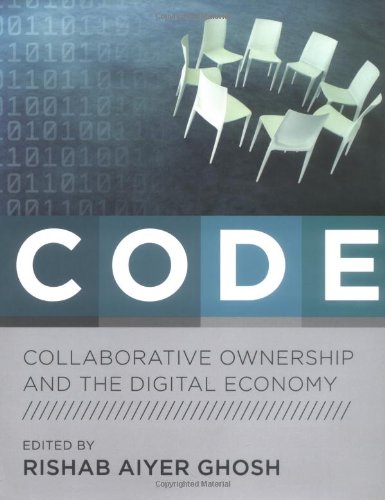
(Ebook) CODE: Collaborative Ownership and the Digital Economy by Rishab Aiyer Ghosh ISBN 9780262072601, 0262072602

  • SKU: EBN-1219082
Zoomable Image
$ 32 $ 40 (-20%)

Status:

Available

4.6

38 reviews
Instant download (eBook) CODE: Collaborative Ownership and the Digital Economy after payment.
Authors:Rishab Aiyer Ghosh
Pages:359 pages.
Year:2005
Editon:illustrated edition
Publisher:The MIT Press
Language:english
File Size:1.95 MB
Format:pdf
ISBNS:9780262072601, 0262072602
Categories: Ebooks

Product desciption

(Ebook) CODE: Collaborative Ownership and the Digital Economy by Rishab Aiyer Ghosh ISBN 9780262072601, 0262072602

Open source software is considered by many to be a novelty and the open source movement a revolution. Yet the collaborative creation of knowledge has gone on for as long as humans have been able to communicate. CODE looks at the collaborative model of creativity—with examples ranging from collective ownership in indigenous societies to free software, academic science, and the human genome project—and finds it an alternative to proprietary frameworks for creativity based on strong intellectual property rights. Intellectual property rights, argues Rishab Ghosh in his introduction, were ostensibly developed to increase creativity; but today, policy decisions that treat knowledge and art as if they were physical forms of property actually threaten to decrease creativity, limit public access to creativity, and discourage collaborative creativity. ''Newton should have had to pay a license fee before being allowed even to see how tall the 'shoulders of giants' were, let alone to stand upon them,'' he writes. The contributors to CODE, from such diverse fields as economics, anthropology, law, and software development, examine collaborative creativity from a variety of perspectives, looking at new and old forms of creative collaboration and the mechanisms emerging to study them. Discussing the philosophically resonant issues of ownership, property, and the commons, they ask if the increasing application of the language of property rights to knowledge and creativity constitutes a second enclosure movement—or if the worldwide acclaim for free software signifies a renaissance of the commons. Two concluding chapters offer concrete possibilities for both alternatives, with one proposing the establishment of ''positive intellectual rights'' to information and another issuing a warning against the threats to networked knowledge posed by globalization.
*Free conversion of into popular formats such as PDF, DOCX, DOC, AZW, EPUB, and MOBI after payment.

Related Products