logo
Product categories

EbookNice.com

Most ebook files are in PDF format, so you can easily read them using various software such as Foxit Reader or directly on the Google Chrome browser.
Some ebook files are released by publishers in other formats such as .awz, .mobi, .epub, .fb2, etc. You may need to install specific software to read these formats on mobile/PC, such as Calibre.

Please read the tutorial at this link.  https://ebooknice.com/page/post?id=faq


We offer FREE conversion to the popular formats you request; however, this may take some time. Therefore, right after payment, please email us, and we will try to provide the service as quickly as possible.


For some exceptional file formats or broken links (if any), please refrain from opening any disputes. Instead, email us first, and we will try to assist within a maximum of 6 hours.

EbookNice Team
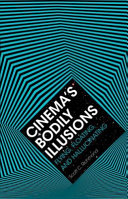
(Ebook) Cinema's Bodily Illusions by Scott C. Richmond ISBN 9780816690961, 0816690960

  • SKU: EBN-50758848
Zoomable Image
$ 32 $ 40 (-20%)

Status:

Available

0.0

0 reviews
Instant download (eBook) Cinema's Bodily Illusions after payment.
Authors:Scott C. Richmond
Pages:264 pages.
Year:2016
Editon:Illustrated
Publisher:Univ Of Minnesota Press
Language:english
File Size:7.32 MB
Format:pdf
ISBNS:9780816690961, 0816690960
Categories: Ebooks

Product desciption

(Ebook) Cinema's Bodily Illusions by Scott C. Richmond ISBN 9780816690961, 0816690960

Do contemporary big-budget blockbuster films like Gravity move something in us that is fundamentally the same as what avant-garde and experimental films have done for more than a century? In a powerful challenge to mainstream film theory, Cinema's Bodily Illusions demonstrates that this is the case. Scott C. Richmond bridges genres and periods by focusing, most palpably, on cinema's power to evoke illusions: feeling like you're flying through space, experiencing 3D without glasses, or even hallucinating. He argues that cinema is, first and foremost, a technology to modulate perception. He presents a theory of cinema as a proprioceptive technology: cinema becomes art by modulating viewers' embodied sense of space. It works primarily not at the level of the intellect but at the level of the body. Richmond develops his theory through examples of direct perceptual illusion in cinema: hallucinatory flicker phenomena in Tony Conrad's The Flicker, eerie depth effects in Marcel Duchamp's Anémic Cinéma, the illusion of bodily movement through onscreen space in Stanley Kubrick's 2001, Godfrey Reggio's Koyaanisqatsi, and Alfonso Cuarón's Gravity. In doing so he combines insights from Maurice Merleau-Ponty's phenomenology of perception and James J. Gibson's ecological approach to perception. The result is his distinctive ecological phenomenology, which allows us to refocus on the cinema's perceptual, rather than representational, power. Arguing against modernist habits of mind in film theory and aesthetics, and the attendant proclamations of cinema's death or irrelevance, Richmond demonstrates that cinema's proprioceptive aesthetics make it an urgent site of contemporary inquiry.
*Free conversion of into popular formats such as PDF, DOCX, DOC, AZW, EPUB, and MOBI after payment.

Related Products