Most ebook files are in PDF format, so you can easily read them using various software such as Foxit Reader or directly on the Google Chrome browser.
Some ebook files are released by publishers in other formats such as .awz, .mobi, .epub, .fb2, etc. You may need to install specific software to read these formats on mobile/PC, such as Calibre.
Please read the tutorial at this link. https://ebooknice.com/page/post?id=faq
We offer FREE conversion to the popular formats you request; however, this may take some time. Therefore, right after payment, please email us, and we will try to provide the service as quickly as possible.
For some exceptional file formats or broken links (if any), please refrain from opening any disputes. Instead, email us first, and we will try to assist within a maximum of 6 hours.
EbookNice Team
Status:
Available4.9
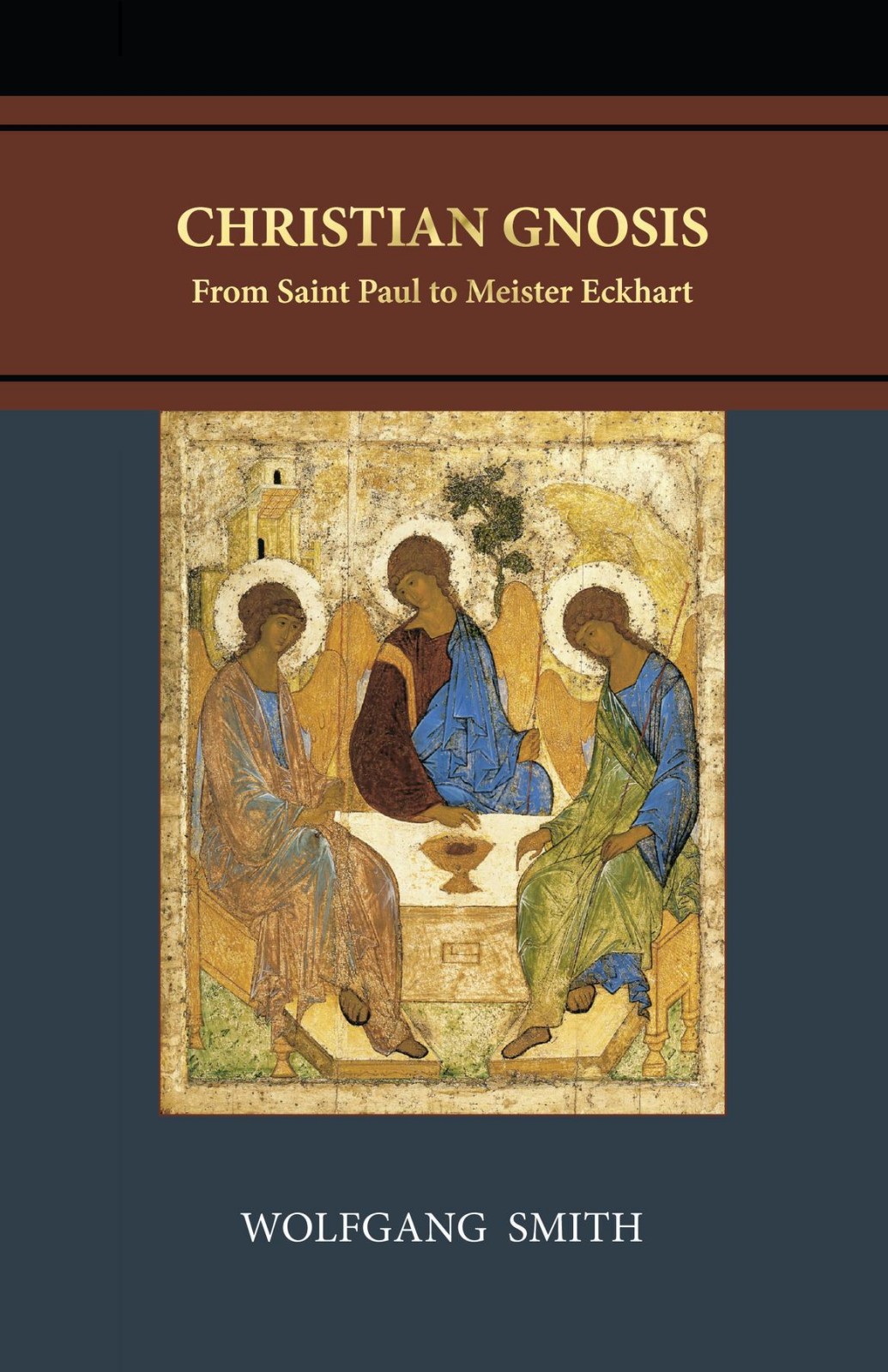
10 reviewsBasing himself principally upon the teachings of Saint Paul and the Clementine Stromata, the author begins the present treatise by distinguishing the idea of gnosis in nascent Christianity from its Gnostic counterfeit. He then considers the implications of authentic gnosis for cosmology, a question that connects intimately with his earlier studies, notably his ground-breaking work regarding the interpretation of quantum theory. The same considerations, however, which invalidate "naïve" cosmology, have bearing on the theological notion of creatio ex nihilo as well; it is this crucial recognition that leads the author to consider alternative formulations within the Judeo-Christian tradition: from Christian Kabbalah to Jacob Boehme and Meister Eckhart. What emerges are the outlines of a Trinitarian nondualism definitive of Christian gnosis. "Wolfgang Smith broaches a vast range of subjects with a mastery that bespeaks an immense culture.
"--Jean Borella "Here is that rare person who is equally at home with Eckhart and Einstein, Heraclitus and Heisenberg!"--Harry Oldmeadow "Wolfgang Smith is as important a thinker as our times boast.
"--Huston Smith After graduating from Cornell University at age eighteen with majors in physics, mathematics and philosophy, Wolfgang Smith took an M.S. from Purdue, following which he spent three years at Bell Aircraft Corporation as an aerodynamicist. During this period he gained recognition for his pioneering papers on the effect of diffusion fields, which provided a theoretical solution to the so-called re-entry problem for space flight. After receiving a Ph.
D. in mathematics from Columbia University, Dr. Smith pursued a professorial career in that field. Soon however his center of interest shifted from the pursuit of science to the critique of scientism and the rediscovery of metaphysics as a theological discipline. He has authored six books and numerous articles, and is today widely recognized as a leading authority in these twin fie
5.0
32 reviews
4.5
7 reviews
5.0
38 reviews

4.9
18 reviews
4.9
39 reviews
5.0
39 reviews