
Most ebook files are in PDF format, so you can easily read them using various software such as Foxit Reader or directly on the Google Chrome browser.
Some ebook files are released by publishers in other formats such as .awz, .mobi, .epub, .fb2, etc. You may need to install specific software to read these formats on mobile/PC, such as Calibre.
Please read the tutorial at this link. https://ebooknice.com/page/post?id=faq
We offer FREE conversion to the popular formats you request; however, this may take some time. Therefore, right after payment, please email us, and we will try to provide the service as quickly as possible.
For some exceptional file formats or broken links (if any), please refrain from opening any disputes. Instead, email us first, and we will try to assist within a maximum of 6 hours.
EbookNice Team
Status:
Available0.0
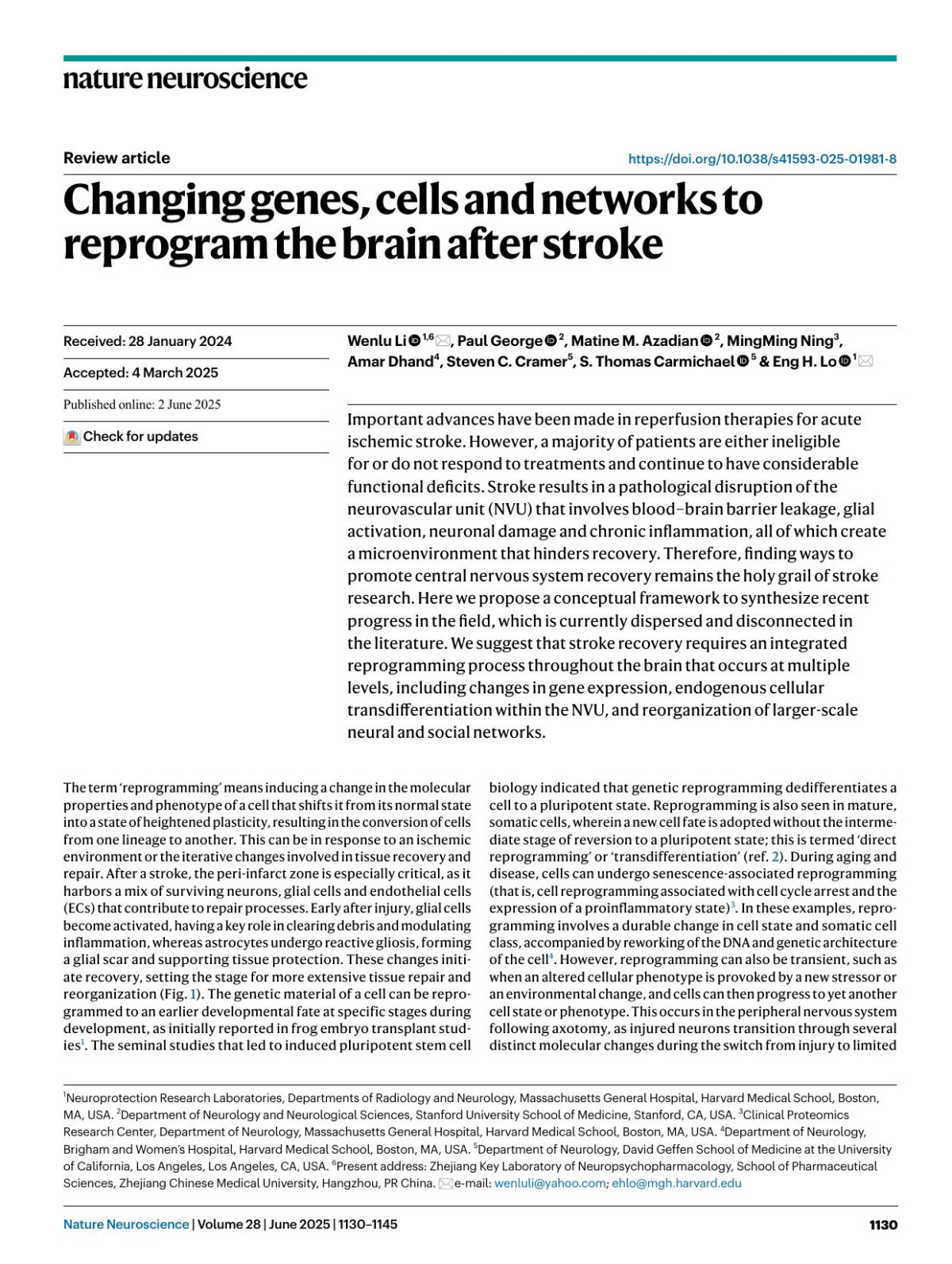
0 reviewsImportant advances have been made in reperfusion therapies for acute ischemic stroke. However, a majority of patients are either ineligible for or do not respond to treatments and continue to have considerable functional defcits. Stroke results in a pathological disruption of the neurovascular unit (NVU) that involves blood–brain barrier leakage, glial activation, neuronal damage and chronic infammation, all of which create a microenvironment that hinders recovery. Therefore, fnding ways to promote central nervous system recovery remains the holy grail of stroke research. Here we propose a conceptual framework to synthesize recent progress in the feld, which is currently dispersed and disconnected in the literature. We suggest that stroke recovery requires an integrated reprogramming process throughout the brain that occurs at multiple levels, including changes in gene expression, endogenous cellular transdiferentiation within the NVU, and reorganization of larger-scale neural and social networks.