logo
Product categories

EbookNice.com

Most ebook files are in PDF format, so you can easily read them using various software such as Foxit Reader or directly on the Google Chrome browser.
Some ebook files are released by publishers in other formats such as .awz, .mobi, .epub, .fb2, etc. You may need to install specific software to read these formats on mobile/PC, such as Calibre.

Please read the tutorial at this link.  https://ebooknice.com/page/post?id=faq


We offer FREE conversion to the popular formats you request; however, this may take some time. Therefore, right after payment, please email us, and we will try to provide the service as quickly as possible.


For some exceptional file formats or broken links (if any), please refrain from opening any disputes. Instead, email us first, and we will try to assist within a maximum of 6 hours.

EbookNice Team
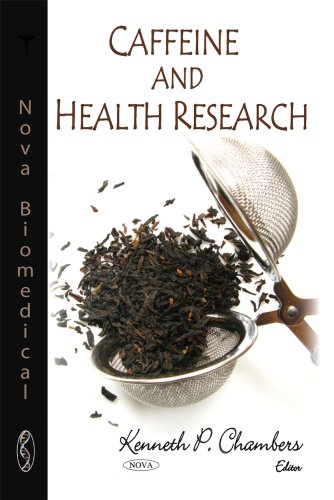
(Ebook) Caffeine and health research by Kenneth P. Chambers ISBN 9781604564372, 9781607416791, 1604564377, 1607416794

  • SKU: EBN-1185136
Zoomable Image
$ 32 $ 40 (-20%)

Status:

Available

0.0

0 reviews
Instant download (eBook) Caffeine and health research after payment.
Authors:Kenneth P. Chambers
Pages:230 pages.
Year:2009
Editon:1
Publisher:Nova Biomedical Books
Language:english
File Size:2.64 MB
Format:pdf
ISBNS:9781604564372, 9781607416791, 1604564377, 1607416794
Categories: Ebooks

Product desciption

(Ebook) Caffeine and health research by Kenneth P. Chambers ISBN 9781604564372, 9781607416791, 1604564377, 1607416794

Caffeine is the most widely consumed drug in the world, most commonly from the beverages coffee, tea and soda. An estimated 80 percent of the world's population consumes a caffeine-containing substance daily. A typical 8-ounce (240-ml) cup of instant coffee contains about 100 mg of caffeine - about twice as much as a cup of tea or a 12-ounce (360-ml) can/bottle of soda. A 30-gram chocolate bar might contain as much caffeine as half a cup of tea. More than 99 percent of orally ingested caffeine is absorbed - with peak plasma levels obtained in 15 to 45 minutes. Caffeine is soluble in both water and oil and can readily cross the blood-brain barrier. Caffeine potentially has pharmacological actions other than blockage of adenosine receptors, but it requires 20 times as much caffeine to inhibit phosphodiesterase, 40 times as much caffeine to block GABAA receptors and 100 times as much caffeine to mobilise intracellular calcium as is required to block adenosine receptors. Caffeine acts primarily by the direct action of blocking adenosine receptors and by the indirect action upon the receptors for neurotransmitters. This book presents important research on this fascinating and relevant field of research.
*Free conversion of into popular formats such as PDF, DOCX, DOC, AZW, EPUB, and MOBI after payment.

Related Products