
Most ebook files are in PDF format, so you can easily read them using various software such as Foxit Reader or directly on the Google Chrome browser.
Some ebook files are released by publishers in other formats such as .awz, .mobi, .epub, .fb2, etc. You may need to install specific software to read these formats on mobile/PC, such as Calibre.
Please read the tutorial at this link. https://ebooknice.com/page/post?id=faq
We offer FREE conversion to the popular formats you request; however, this may take some time. Therefore, right after payment, please email us, and we will try to provide the service as quickly as possible.
For some exceptional file formats or broken links (if any), please refrain from opening any disputes. Instead, email us first, and we will try to assist within a maximum of 6 hours.
EbookNice Team
Status:
Available4.7
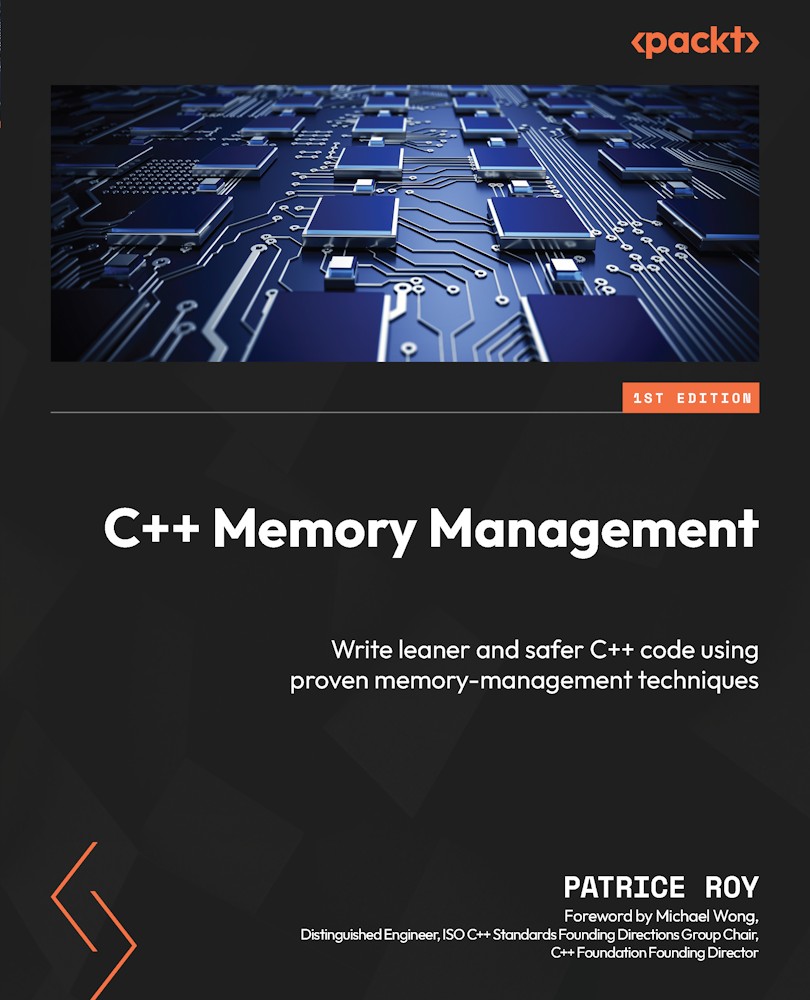
5 reviewsHarness the power of C++ to build smaller, faster, safer, and more predictable programs using the latest techniques and best practices to optimize performance and ensure reliability in your software development projects
Key FeaturesUse contemporary C++ features to enhance code safety and reliabilityDevelop a deeper understanding of memory management mechanisms in C++Write programs that adapt to the constraints of your chosen architecture or platformPurchase of the print or Kindle book includes a free PDF eBookBook DescriptionC++ programmers often face challenges in allocating and managing memory efficiently, especially given the diverse needs of real-time systems, embedded systems, games, and conventional desktop applications. This book offers a targeted approach to address the unique memory constraints of each domain.
Written by an ISO C++ Standards Committee member, Patrice Roy, this guide covers fundamental concepts of object lifetime and memory organization to help you write simpler and safer programs. You’ll learn how to control memory allocation mechanisms, create custom containers and allocators, and adapt allocation operators to suit your specific requirements, making your programs smaller, faster, safer, and more predictable.
Starting with core principles of memory management, this book introduces modern facilities that simplify your work and then dives into memory management mechanics, building solutions for specific application needs, and measuring their impact on your program’s behavior.
By the end of this book, you’ll be able to write secure programs that handle memory optimally for your application domain. You will also have a strong grasp of both high-level abstractions for safer programs and low-level abstractions that allow detailed customization.
What you will learnMaster the C++ object model to write more efficient and maintainable codeAutomate resource management to reduce manual errors and improve safetyCustomize memory allocation operators to optimize performance for specific applicationsDevelop your own smart pointers to manage dynamic memory with greater controlAdapt allocation behavior to meet the unique needs of different data typesCreate safe and fast containers to ensure optimal data handling in your programsUtilize standard allocators to streamline memory management in your containersWho this book is forThis book is for programmers who find C++ memory management challenging yet want to master it. It’s ideal for those seeking greater control over memory allocation to make their programs smaller, faster, and safer. Whether you're a seasoned C++ developer or transitioning from other languages, you'll gain insights into how C++ can enhance your programming. It’s especially valuable if you’re working in constrained environments, like embedded systems or game development. Prior experience with programming concepts, such as generic and concurrent programming, is helpful.
Table of ContentsObjects, Pointers, and ReferencesThings to Be Careful WithCasts and cv-qualificationsUsing DestructorsUsing Standard Smart PointersWriting Smart PointersOverloading Memory Allocation OperatorsWriting a Naïve Leak DetectorAtypical Allocation MechanismsArena-Based M
4.4
14 reviews

4.8
7 reviews
4.9
39 reviews
4.4
25 reviews
4.6
11 reviews
4.3
11 reviews