Most ebook files are in PDF format, so you can easily read them using various software such as Foxit Reader or directly on the Google Chrome browser.
Some ebook files are released by publishers in other formats such as .awz, .mobi, .epub, .fb2, etc. You may need to install specific software to read these formats on mobile/PC, such as Calibre.
Please read the tutorial at this link. https://ebooknice.com/page/post?id=faq
We offer FREE conversion to the popular formats you request; however, this may take some time. Therefore, right after payment, please email us, and we will try to provide the service as quickly as possible.
For some exceptional file formats or broken links (if any), please refrain from opening any disputes. Instead, email us first, and we will try to assist within a maximum of 6 hours.
EbookNice Team
Status:
Available4.7
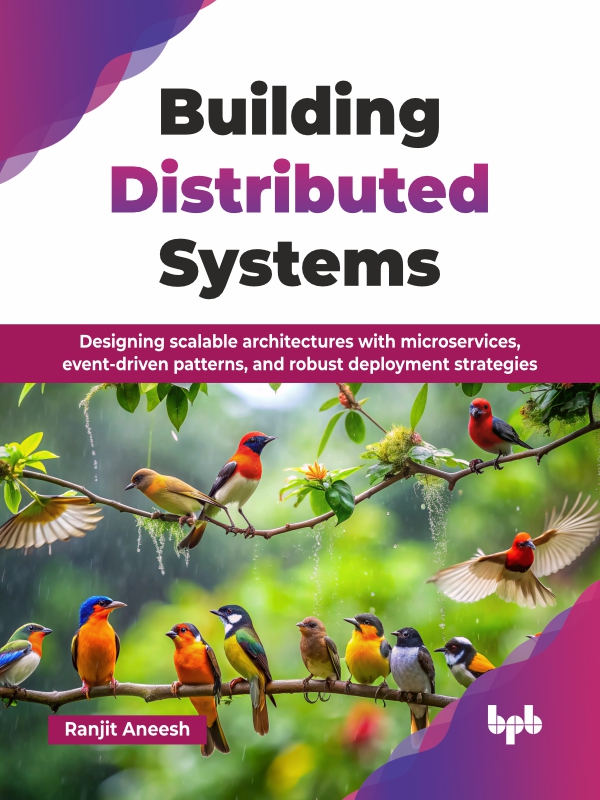
9 reviewsIn this book, we will dive into the fundamentals of distributed systems, understand how computing evolved and what are some critical aspects of these systems that software architects and engineers must always be aware of to help them make design and implementation decisions. Furthermore, we will learn to make tradeoff decisions grounded on key objectives that our systems should focus on versus what may not be so important for each specific use case.
By the end of this book, you will possess a strong understanding of distributed systems and be equipped to design, build, and deploy scalable and reliable applications. You will gain practical insights into modern architectures, enabling you to confidently tackle the challenges of building and maintaining distributed systems in any environment.
What you will learn
Architect microservices, implement caching, and deploy resilient distributed systems.
Master event-driven patterns, traffic routing, and cloud platform selection.
Design for consistency, availability, and implement robust data strategies.
Optimize performance via CI/CD, load balancing, and advanced caching.
Engineer fault-tolerant systems using CQRS, circuit breakers, and cloud services.
Navigate CAP theorem trade-offs and build observable distributed architectures.
Deploy with feature flags, Kubernetes, and ensure operational readiness.
Build scalable systems, manage data, and optimize cloud infrastructure.
4.8
20 reviews
4.5
8 reviews
4.5
34 reviews
4.8
27 reviews
4.7
6 reviews
4.6
21 reviews
4.7
17 reviews
4.7
14 reviews