logo
Product categories

EbookNice.com

Most ebook files are in PDF format, so you can easily read them using various software such as Foxit Reader or directly on the Google Chrome browser.
Some ebook files are released by publishers in other formats such as .awz, .mobi, .epub, .fb2, etc. You may need to install specific software to read these formats on mobile/PC, such as Calibre.

Please read the tutorial at this link.  https://ebooknice.com/page/post?id=faq


We offer FREE conversion to the popular formats you request; however, this may take some time. Therefore, right after payment, please email us, and we will try to provide the service as quickly as possible.


For some exceptional file formats or broken links (if any), please refrain from opening any disputes. Instead, email us first, and we will try to assist within a maximum of 6 hours.

EbookNice Team
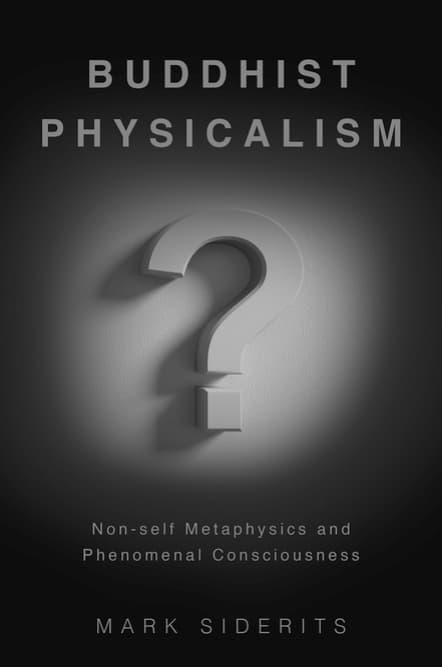
Buddhist Physicalism? Non-self Metaphysics and Phenomenal Consciousness by Mark Siderits ISBN 9780197799666, 9780197799697, 0197799663, 0197799698 instant download

  • SKU: EBN-238940872
Zoomable Image
$ 32 $ 40 (-20%)

Status:

Available

4.8

24 reviews
Instant download (eBook) Buddhist Physicalism? Non-self Metaphysics and Phenomenal Consciousness after payment.
Authors:Mark Siderits
Pages:235 pages
Year:2025
Publisher:Oxford University Press
Language:english
File Size:11.44 MB
Format:pdf
ISBNS:9780197799666, 9780197799697, 0197799663, 0197799698
Categories: Ebooks

Product desciption

Buddhist Physicalism? Non-self Metaphysics and Phenomenal Consciousness by Mark Siderits ISBN 9780197799666, 9780197799697, 0197799663, 0197799698 instant download

Indian Buddhist philosophers uniformly rejected physicalism, the view that everything is physical in nature, in favor of either a dualist or an idealist ontology. This work explores the question of whether this stance can be justified in light of our current understanding of the natural world and our place in it. Might physicalism be compatible with Buddhism? It explores the justification for the core Buddhist thesis of non-self and discusses the resulting constraints on our ultimate ontology. Buddhist commitment to the non-existence of a self means that consciousness must be understood to be subjectless. This consequence, taken in conjunction with Buddhist arguments for mereological nihilism, leads to considerable difficulties in explaining how cognitions might be among the ultimate constituents of reality. An alternative view, first developed by non-Buddhist Indian philosophers, has it that consciousness is something postulated by a theory that helps us predict bodily and verbal behavior. This opens the door to the thesis known today as illusionism, that phenomenal consciousness is illusory (and hence does not pose a threat to physicalism). Support for this alternative conception of consciousness is drawn from current empirical research in developmental psychology and cognitive science. Using resources drawn from both the Buddhist philosophical tradition and current work in philosophy of mind, the work then sketches a proposed solution to the “hard problem” for physicalism, the problem of explaining how phenomenal consciousness might be illusory. It then returns to the question of the compatibility of the resulting view with Buddhist philosophical and soteriological commitments.
*Free conversion of into popular formats such as PDF, DOCX, DOC, AZW, EPUB, and MOBI after payment.

Related Products