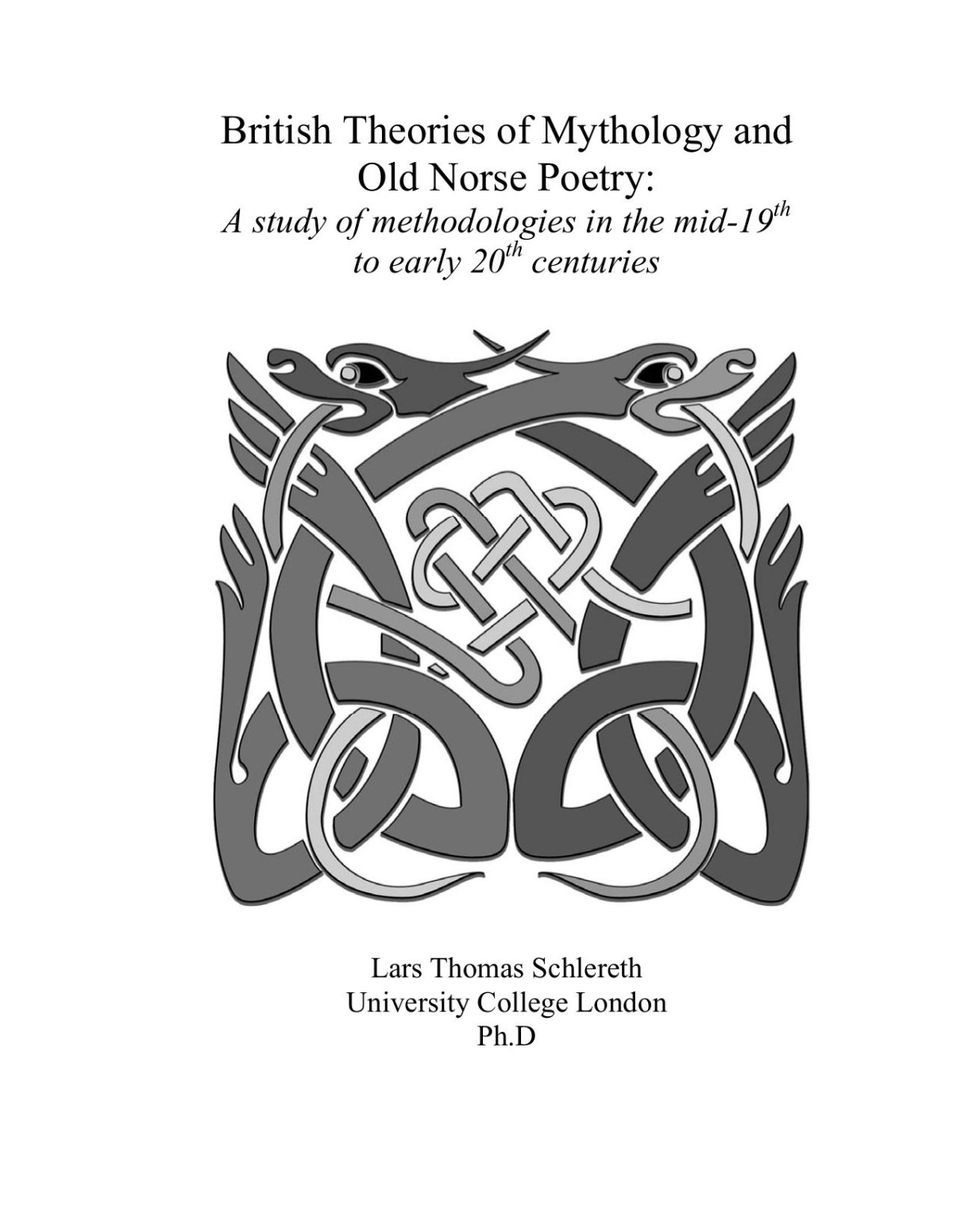
British Theories of Mythology and Old Norse Poetry: A study of methodologies in the mid-19th to early 20th centuries by Lars Thomas Schlereth instant download
This study is an examination of the major theories concerning mythology that
were popular in the United Kingdom from the mid-nineteenth century to the early
twentieth century and the ways in which they can be applied to Old Norse myth.
The goal is to develop a greater understanding of how specific theories can or cannot
be applied to certain mythological poems that are contained with the Poetic Edda
collection.
The examination begins with the etymological approach of Max Müller and
his applicability to Alvíssmál, Skírnismál and Lokasenna. It will be shown that
Müller’s ideas are difficult to apply, with only Skírnismál being particularly
receptive. The next chapter examines the development of anthropological
approaches, specifically that of Edward Tylor and Andrew Lang, and the content of
Vafþrúðnismál and Vǫlospá. These poems will be shown to have many indicators of
the scholar’s theories, but offer little insight into any larger, societal, functions the
myths contained within the poems may have served. The third chapter focuses on
the role ritual was thought to play in relation to myth and continues the examination
of Vafþrúðnismál and Vǫlospá from the perspective of William Robertson Smith and
Sir James George Frazer. Here, special focus is placed on the riddle-contest form of
Vafþrúðnismál and the narrative surrounding the god Baldr that is partially contained
in Vǫlospá. Finally, the study analyzes the theories of the Cambridge Ritualists and
Bertha Phillpotts; scholars who posited that myths were derived from not only
rituals, but ritual dramas. These final scholars will reveal that at the beginning of the
twentieth century there was good reason to believe some of the Poetic Edda poems
had a previous dramatic state, but more thorough research was needed.
The study concludes with a summary of scholarship that followed these
academics and possible future avenues of examination.
*Free conversion of into popular formats such as PDF, DOCX, DOC, AZW, EPUB, and MOBI after payment.