logo
Product categories

EbookNice.com

Most ebook files are in PDF format, so you can easily read them using various software such as Foxit Reader or directly on the Google Chrome browser.
Some ebook files are released by publishers in other formats such as .awz, .mobi, .epub, .fb2, etc. You may need to install specific software to read these formats on mobile/PC, such as Calibre.

Please read the tutorial at this link.  https://ebooknice.com/page/post?id=faq


We offer FREE conversion to the popular formats you request; however, this may take some time. Therefore, right after payment, please email us, and we will try to provide the service as quickly as possible.


For some exceptional file formats or broken links (if any), please refrain from opening any disputes. Instead, email us first, and we will try to assist within a maximum of 6 hours.

EbookNice Team
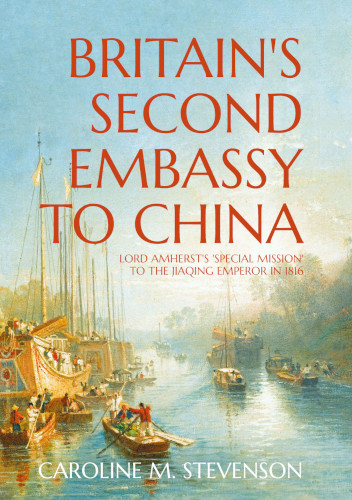
Britain’s Second Embassy to China: Lord Amherst's 'Special Mission' to the Jiaqing Emperor in 1816 by Caroline Stevenson ISBN 9781760464097, 9781760464080, 1760464090, 1760464082 instant download

  • SKU: EBN-236652580
Zoomable Image
$ 32 $ 40 (-20%)

Status:

Available

4.8

8 reviews
Instant download (eBook) Britain’s Second Embassy to China: Lord Amherst's 'Special Mission' to the Jiaqing Emperor in 1816 after payment.
Authors:Caroline Stevenson
Pages:404 pages
Year:2021
Publisher:ANU Press
Language:english
File Size:24.74 MB
Format:pdf
ISBNS:9781760464097, 9781760464080, 1760464090, 1760464082
Categories: Ebooks

Product desciption

Britain’s Second Embassy to China: Lord Amherst's 'Special Mission' to the Jiaqing Emperor in 1816 by Caroline Stevenson ISBN 9781760464097, 9781760464080, 1760464090, 1760464082 instant download

Lord Amherst’s diplomatic mission to the Qing Court in 1816 was the second British embassy to China. The first led by Lord Macartney in 1793 had failed to achieve its goals. It was thought that Amherst had better prospects of success, but the intense diplomatic encounter that greeted his arrival ended badly. Amherst never appeared before the Jiaqing emperor and his embassy was expelled from Peking on the day it arrived.
-
Historians have blamed Amherst for this outcome, citing his over-reliance on the advice of his Second Commissioner, Sir George Thomas Staunton, not to kowtow before the emperor. Detailed analysis of British sources reveal that Amherst was well informed on the kowtow issue and made his own decision for which he took full responsibility. Success was always unlikely because of irreconcilable differences in approach. China’s conduct of foreign relations based on the tributary system required submission to the emperor, thus relegating all foreign emissaries and the rulers they represented to vassal status, whereas British diplomatic practice was centred on negotiation and Westphalian principles of equality between nations.
-
The Amherst embassy’s failure revised British assessments of China and led some observers to believe that force, rather than diplomacy, might be required in future to achieve British goals. The Opium War of 1840 that followed set a precedent for foreign interference in China, resulting in a century of ‘humiliation’. This resonates today in President Xi Jinping’s call for ‘National Rejuvenation’ to restore China’s historic place at the centre of a new Sino-centric global order.
*Free conversion of into popular formats such as PDF, DOCX, DOC, AZW, EPUB, and MOBI after payment.

Related Products