
Most ebook files are in PDF format, so you can easily read them using various software such as Foxit Reader or directly on the Google Chrome browser.
Some ebook files are released by publishers in other formats such as .awz, .mobi, .epub, .fb2, etc. You may need to install specific software to read these formats on mobile/PC, such as Calibre.
Please read the tutorial at this link. https://ebooknice.com/page/post?id=faq
We offer FREE conversion to the popular formats you request; however, this may take some time. Therefore, right after payment, please email us, and we will try to provide the service as quickly as possible.
For some exceptional file formats or broken links (if any), please refrain from opening any disputes. Instead, email us first, and we will try to assist within a maximum of 6 hours.
EbookNice Team
Status:
Available4.4
19 reviews
ISBN 10: 1475808879
ISBN 13: 9781475808872
Author: Mickey Kolis, Todd Lenz, Benjamin H. Kolis
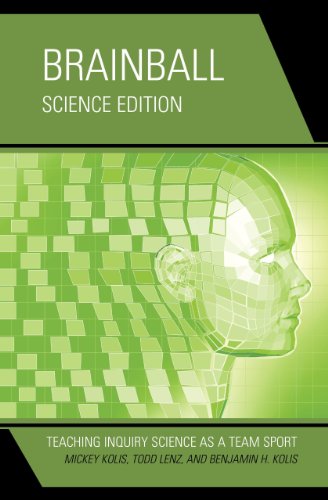
What is a game? You might think of cards and dice, computers, or sports. You might even think of music or theater as games. But what about Science? Games have rules, players, and objectives, but, maybe most importantly, games are fun. People play games because they think they are “fun,” and sometimes they even learn some important lessons. Classrooms are intended to teach important lessons, and sometimes people think they are fun (not nearly often enough).
Brainball (Science Edition) is designed to combine the best of both worlds! Science Inquiry is the game and learning the intended outcome! Veteran science teachers Kolis and Lenz provide small step-by-step 5E’s lessons and an inquiry-based sequence to guide you through that first learning experience so that you too can play the game of Brainball (Science Edition)!
Section 1: Brainball!Chapter 1: Brainball (Science Edition) – The Point of the Game is LearningChapter 2: The Big Ideas: Product, Process, and Community aligned with PurposeChapter 3: Brainball (SE) Beliefs (Dispositions)Chapter 4: Brainball (SE) Key Concepts (Knowledge)Chapter 5: Brainball (SE) SkillsSection 2: Five Coaching TipsChapter 6: Tip 1: Keep the End-in-MindChapter 7: Tip 2: Play the GameChapter 8: Tip 3: Competitions as EvaluationsChapter 9: Tip 4: Sequences matterChapter 10: Tip 5: Explicit CommunicationsSection 3: Day-to-Day Lesson Plans: Brainball IlluminatedLesson 1: PerceptionsLesson 2: ObservationsLesson 3: Patent DescriptionLesson 4: Problem StatementsLesson 5: Picking Problem StatementsLesson 6: Gathering InformationLesson 7: Gathering InformationLesson 8: HypothesisLesson 9: Null HypothesisLesson 10: Experimental ProcedureLesson 11: Experimental DesignLesson 12: Presenting Data (Tables)Lesson 13: Presenting Data (Graphs)Lesson 14: Analyzing DataLesson 15: Writing a ConclusionSection 4: A More Integrated Example!Chapter 11: All together now!
how to teach inquiry based learning
brain-based teaching
teaching brainiacs
teaching the brain
whole brain teaching starball
Tags: Mickey Kolis, Todd Lenz, Benjamin H Kolis, Brainball, Teaching, Inquiry, Science, Team, Sport
4.7
21 reviews
4.6
12 reviews


4.7
9 reviews
4.7
9 reviews

4.6
6 reviews