
Most ebook files are in PDF format, so you can easily read them using various software such as Foxit Reader or directly on the Google Chrome browser.
Some ebook files are released by publishers in other formats such as .awz, .mobi, .epub, .fb2, etc. You may need to install specific software to read these formats on mobile/PC, such as Calibre.
Please read the tutorial at this link. https://ebooknice.com/page/post?id=faq
We offer FREE conversion to the popular formats you request; however, this may take some time. Therefore, right after payment, please email us, and we will try to provide the service as quickly as possible.
For some exceptional file formats or broken links (if any), please refrain from opening any disputes. Instead, email us first, and we will try to assist within a maximum of 6 hours.
EbookNice Team
Status:
Available4.6
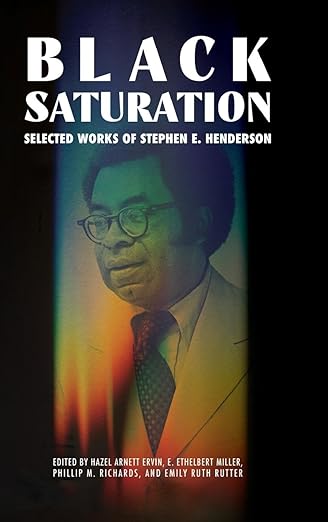
18 reviewsHenderson deftly conceptualized the ways in which aesthetic innovations were interwoven with revolutionary exigencies—a marriage of poetry and politics that became a hallmark of the 1960s and ’70s. While other critics often ignored or fumbled to construct an adequate rubric for evaluating and celebrating Black Arts poetry—penned by Amiri Baraka, Carolyn Rodgers, Sonia Sanchez, Jayne Cortez, Mari Evans, Sarah Webster Fabio, Haki Madhubuti, and Larry Neal, among many others—Henderson constellated a triad of interdependent characteristics (structure, theme, and saturation) through which he examined Black literature in general and poetry in particular.
Revisiting Henderson’s scholarship in the third decade of the twenty-first century allows us, on the one hand, to further appreciate his imprint on current scholarship about Black literature, especially poetry, and, on the other, to introduce contemporary students and scholars to his salient theoretical frameworks, not to mention his persuasive critical style.