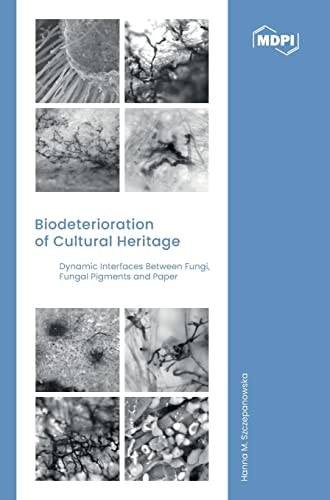
Biodeterioration of Cultural Heritage: Dynamic Interfaces between Fungi, Fungal Pigments and Paper by Hanna Szczepanowska ISBN 9783036520933, 9783036520940, 3036520937, 3036520945 instant download
Fungi-induced stains on paper are one of the most challenging forms of biodeterioration to study and to prevent; this is because they involve living organisms, and the ways in which fungi respond to changes in the environment and modifications of paper are unpredictable.
-
Yet, there is a great desire among those who encounter fungi on documents, manuscripts, or artwork to remove fungi and clean the paper. This experience in most cases is particularly challenging. What are the reasons behind this challenge? This ground-breaking book attempts to answer this question, among others, by exploring the complex interfacial forces between paper, fungi, and their pigmented secretions which result in bio-stains on paper.
-
Black fungi, collectively referred to as Dematiaceous fungi, were used in this study as a subset of pigment-producing fungi species. The focus is on two, under-studied aspects of the fungi infestation of paper, an interface of fungal pigments and paper, and the impact of light on the production of fungi bio-stains.
-
The results of analytical testing included in this book elucidate the synergistic interactions between the environment, biological clocks of the microorganisms, and secretion of fungal pigments to paper. The black fungal pigment formation is explored in-depth in two scenarios: one that is ‘natural’, when the bio-stains of original artworks have occurred over time by chance, and another, induced by Aspergillus niger, in bio-simulation on known papers in a controlled environment. The findings are intended to provide guidance for preservation strategies, mitigating the biodeterioration of paper, and designing conservation treatment when applicable.
*Free conversion of into popular formats such as PDF, DOCX, DOC, AZW, EPUB, and MOBI after payment.