
Most ebook files are in PDF format, so you can easily read them using various software such as Foxit Reader or directly on the Google Chrome browser.
Some ebook files are released by publishers in other formats such as .awz, .mobi, .epub, .fb2, etc. You may need to install specific software to read these formats on mobile/PC, such as Calibre.
Please read the tutorial at this link. https://ebooknice.com/page/post?id=faq
We offer FREE conversion to the popular formats you request; however, this may take some time. Therefore, right after payment, please email us, and we will try to provide the service as quickly as possible.
For some exceptional file formats or broken links (if any), please refrain from opening any disputes. Instead, email us first, and we will try to assist within a maximum of 6 hours.
EbookNice Team
Status:
Available4.5
33 reviews
ISBN 10: B08LG2XQYZ
ISBN 13: 978-1351574808
Author: Bhadeshia
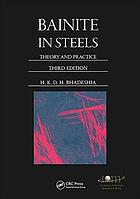
This is the third edition of the book, much expanded to include and incorporate important developments in the subject over the last fifteen years. The book represents a comprehensive treatise on all aspects of the bainite transformation, from the choreography of atoms during the phase change to length scales that are typical of engineering applications. The alloy design that emerges from this explains the role of solute additions, and the pernicious effects of impurities such as hydrogen. The picture presented is self-consistent and therefore is able to guide the reader on the exploitation of theory to the design of some of the most exciting steels, including the world’s first bulk nanostructured metal.
1 Introduction
1.1 The Discovery of Bainite
1.2 The Early Research
1.2.1 Crystallography
1.2.2 The Incomplete Reaction Phenomenon
1.2.3 Carbon Redistribution
1.2.4 Thermodynamics
1.2.5 Paraequilibrium
1.2.6 Kinetics
1.3 Bainitic Steels: Industrial Practice
1.4 Summary of the Early Research
2 Bainitic Ferrite
2.1 Sheaves of Bainite
2.1.1 Morphology
2.1.2 Thickness of bainite plates
2.1.3 Stereology
2.2 Dislocation Density
2.2.1 Quantitative Estimation of Dislocation Density
2.3 Chemical Composition
2.3.1 Substitutional Alloying Elements
2.3.2 Interstitial Alloying Elements
2.4 Crystallography
2.4.1 Crystallography: Block Size, Austenite Grain Boundary
2.4.2 Autocatalytic Nucleation
2.5 Crystallographic Theory
2.5.1 Application to Bainite
2.5.2 High-Resolution Studies of the Shape Change
2.5.3 The Shape Change: Further Considerations
2.5.4 Shape Change and the Superledge Mechanism
2.5.5 The Structure of the Interface
2.5.6 The Crystallography of a Lath of Bainite
2.6 Unit Cell Symmetry
2.6.1 Symmetry of Interstices
2.6.2 Tetragonality of Bainitic Ferrite
2.7 Microstructure of Bainite: The Midrib
2.8 Summary
3 Carbide Precipitation
3.1 Upper Bainite
3.2 Lower Bainite
3.2.1 Precipitation within Lower Bainitic Ferrite
3.2.2 Precipitation between Lower Bainitic Ferrite Platelets
3.3 Kinetics of Carbide Precipitation
3.3.1 Partitioning and Distribution of Carbon
3.3.2 Kinetics of Precipitation from Residual Austenite
3.3.3 Kinetics of Precipitation within Bainitic Ferrite
3.4 Crystallography of Carbide Precipitation in Bainite
3.4.1 Cementite: Orientation Relationships
3.4.2 The Habit Plane of Cementite
3.4.3 Three-Phase Crystallography
3.4.4 Interphase Precipitation
3.4.5 Relief of Strain Energy
3.4.6 Epsilon-Carbide
3.4.7 Eta- and Chi-Carbides
3.5 Chemical Composition of Bainitic Carbides
3.6 Summary
4 Tempering of Bainite
4.1 Introduction
4.2 Tempering Kinetics
4.3 Tempering of Steels Containing Austenite
4.3.1 Redistribution of Substitutional Solutes
4.3.2 Decomposition of Austenite
4.3.3 Tempering of Nanostructured Bainite
4.4 Coarsening of Cementite
4.5 Secondary Hardening and the Precipitation of Alloy Carbides
4.6 Changes in the Composition of Cementite
4.6.1 Remanent Life Prediction
4.6.2 Theory for Carbide Enrichment
4.6.3 Effect of Carbon on Carbide Enrichment
4.7 Low-Temperature Tempering of Mixed Microstructures
4.8 Sequence of Alloy Carbide Precipitation
4.8.1 Effect of Starting Microstructure on Tempering Reactions
4.9 Changes in the Composition of Alloy Carbides
4.10 Precipitate-free Zones
4.11 Precipitation Hardening with Copper
4.12 Summary
5 Thermodynamics
5.1 Deviations from Equilibrium
5.2 Chemical Potential
5.3 Stored Energy due to Transformation
5.4 Thermodynamics of Growth
5.4.1 Substitutional Solutes during Growth
5.4.2 Interstitial Solutes during Growth
5.4.3 Approach to Equilibrium
5.5 Quench and Partitioning
5.6 Summary
6 Kinetics
6.1 Thermodynamics of Nucleation
6.1.1 Transformation-Start Temperature
6.1.2 Evolution of the Nucleus
6.2 Possible Mechanisms of Nucleation
6.3 Bainite Nucleation
6.4 Empirical Methods for the Bainite-Start Temperature
6.5 The Nucleation Rate
6.5.1 Grain Boundary Nucleation
6.6 Growth Rate
6.6.1 Theory for the Lengthening of Plates
6.6.2 Growth Rate of Sheaves of Bainite
6.6.3 Growth Rate of Sub-Units of Bainite
6.6.4 Solute Drag
6.7 Partitioning of Carbon from Supersaturated Bainitic Ferrite
6.8 Growth with Partial Supersaturation
6.8.1 Stability
6.8.2 The Interface Response Functions
6.8.3 Data on Transformation with Partial Supersaturation
6.8.4 Summary
6.9 Cooperative Growth of Ferrite and Cementite
6.10 Overall Transformation Kinetics
6.10.1 Isothermal Transformation
6.10.2 Incorrect formulation of incubation time
6.10.3 Mechanistic Formulation of the Avarmi Equation
6.10.4 Austenite Grain Size Effects
6.10.5 Anisothermal Transformation Kinetics
6.11 Simultaneous Transformations
6.11.1 Special Cases
6.11.2 Precipitation in Secondary Hardening Steels
6.11.3 Time-Temperature-Transformation Diagrams
6.11.4 Continuous Cooling Transformation Diagrams
6.11.5 Boron, Sulphur and the Rare Earth Elements
6.11.6 Niobium and hardenability
6.12 Superhardenability
6.13 Effect of Chemical Segregation
6.14 Martensitic Transformation in Partially Bainitic Steels
6.14.1 Autocatalysis
6.15 Phase Field Models
6.15.1 Introduction to Phase Fields
6.15.2 Phase Field Simulation of Bainite
6.16 Summary
7 Upper and Lower Bainite
7.1 Matas and Hehemann Model
7.2 Quantitative Model
7.2.1 Time to Decarburise Supersaturated Ferrite
7.2.2 Kinetics of Cementite Precipitation
7.2.3 Quantitative Estimation of the Transition Temperature
7.2.4 Comparison of Theory and Experimental Data
7.3 Mixed Microstructures by Isothermal Transformation
7.4 Other Consequences of the Transition
7.5 Comparison with Tempering of Martensite
7.6 Summary
8 Stress and Strain Effects
8.1 Mechanical Driving Force
8.2 The Bd Temperature
8.3 General Observations
8.3.1 Externally Applied Stress
8.3.2 Internally Generated Stress
8.4 Effect on Microstructure
8.4.1 Extent of Variant Selection
8.5 Effect of Hydrostatic Pressure
8.6 Mechanical Stability of Retained Austenite
8.7 Transformation under Constraint: Residual Stresses
8.8 Anisotropic Strain due to Transformation Plasticity
8.8.1 Interactions between Variants
8.9 Influence of Plastic Strain
8.10 Stress-Affected Carbide Precipitation
8.11 Plastic Deformation and Mechanical Stabilisation
8.11.1 Theoretical Basis
8.11.2 Experimental Evidence
8.11.3 Transformation from Recovered Austenite
8.11.4 Technological Implications of Mechanical Stabilisation
8.12 Summary
9 From Bainite to Austenite
9.1 Heating a Mixture of Austenite and Upper Bainitic Ferrite
9.1.1 One-Dimensional Growth from a Mixture of Austenite and Bainitic Ferrite
9.1.2 Estimation of the Parabolic Thickening Rate Constant
9.2 Anisothermal Transformation
9.3 Heating a Mixture of Cementite and Bainitic Ferrite
9.4 Irradiation-Induced Rapid Heating
9.5 Summary
10 Acicular Ferrite
10.1 General Characteristics and Morphology
10.2 Mechanism of Growth
10.3 Mechanism of Nucleation
10.4 Nucleation and The Role of Inclusions
10.4.1 Aluminium and Titanium Oxides
10.4.2 Sulphur
10.4.3 Phosphorus
10.4.4 Nitrogen, Titanium and Boron
10.4.5 Boron and Hydrogen
10.4.6 Stereological Effects
10.5 Effect of Inclusions on the Austenite Grain Size in Welds
10.6 Influence of Other Transformation Products
10.6.1 Some Specific Effects of Allotriomorphic Ferrite
10.7 Lower Acicular Ferrite
10.8 Stress-Affected Acicular Ferrite
10.9 Effect of Strain on the Acicular Ferrite Transformation
10.10 Inoculated Acicular Ferrite Steels
10.10.1 Structural Steel
10.10.2 Acicular Ferrite Forging Steels
10.10.3 Steelmaking Technology for Inoculated Alloys
10.11 Summary
11 Other Morphologies of Bainite
11.1 Granular Bainite
11.2 Inverse Bainite
11.3 Columnar Bainite
11.4 Alloy Pearlite
11.5 Grain Boundary Lower Bainite
11.6 Coalesced Bainite
11.6.1 Mechanism
11.6.2 Coalesced Bainite in Weld Metals
11.7 Spiky Pearlite
11.8 Summary
12 Mechanical Properties
12.1 General Introduction
12.2 The Strength of Bainite
12.2.1 Hardness
12.2.2 Tensile Strength
12.2.3 Effect of Austenite Grain Size
12.2.4 Effect of Tempering on Strength
12.2.5 The Strength Differential Effect
12.2.6 Temperature Dependence of Strength
12.3 Ratio of Proof Stress to Ultimate Tensile Strength
12.4 Ductility
12.4.1 Ductility: The Role of Retained Austenite
12.5 Impact Toughness
12.5.1 Fully Bainitic Structures
12.6 Fracture Mechanics Approach to Toughness
12.6.1 Microstructural Interpretation of fracture toughness
12.6.2 Cleavage Path and Crystallography
12.6.3 Cleavage Crack Initiation
12.7 Temper Embrittlement
12.7.1 650°C Reversible Temper Embrittlement
12.7.2 300→350 °C Temper Embrittlement
12.7.3 300→350 °C Tempered-Martensite Embrittlement
12.8 Fatigue Resistance of Bainitic Steels
12.8.1 Fatigue of Smooth Samples
12.8.2 Fatigue Crack Growth Rate
12.8.3 Two-Parameter Approach to Growth Rate
12.8.4 Arresting Fatigue Cracks
12.8.5 Fatigue in Laser Hardened Samples
12.8.6 Fatigue and Retained Austenite
12.8.7 Fatigue and Cementite
12.8.8 Corrosion Fatigue
12.8.9 Gigacycle Fatigue Tests
12.8.10 Rolling Contact Fatigue
12.9 Stress Corrosion Resistance and Hydrogen
12.10 Delayed Fracture
12.11 The Creep Resistance of Bainitic Steels
12.11.1 Heat Treatment
12.11.2 2 1/4CrlMo Type Steels
12.11.3 1CrMoV Type Steels
12.11.4 1/4CrMoV Type Steels
12.11.5 Enhanced Cr-Mo Bainitic Steels
12.11.6 Tungsten Strengthened Steels
12.11.7 Regenerative Heat Treatments
12.11.8 Comparison with Martensitic Creep-Resistant Steels
12.11.9 Transition Metal Joints
12.12 Reduced-Activation Steels
12.13 Steels with Mixed Microstructures
12.14 Summary
13 Modern Bainitic Steels
13.1 Alternatives to the Ferrite-Pearlite Microstructure
13.2 Strength
13.3 Bainitic Steels
13.4 Controlled-Rolling of Bainitic Steels
13.4.1 Crystallographic Texture
13.5 Rapidly Cooled Control-Rolled Steels
13.5.1 Pipeline and Plate Steels
13.5.2 Process Parameters
13.5.3 Chemical Segregation
13.5.4 High-temperature processed pipe steel
13.6 Steels with High Formability
13.6.1 TRIP-Assisted Steels
13.6.2 δ-TRIP Steels
13.6.3 Weldability of TRIP-assisted steels
13.6.4 Dieless-Drawn Bainitic Steels
13.7 Ultra-Low-Carbon Bainitic Steels
13.8 Bainitic Forging Steels
13.9 High Strength Bainitic Steels without Carbides
13.10 Thermomechanically Processed High-Strength Steels
13.10.1 Ausformed Bainitic Steels
13.10.2 Strain Tempered Bainitic Steels
13.10.3 Creep Tempering of Bainite
13.11 Flash Processing
13.12 Bainite in Rail Steels
13.12.1 Track Materials
13.12.2 Silicon-rich Carbide-free Bainitic Rail Steels
13.12.3 Wheels
13.12.4 Bearing Alloys
13.13 Bainitic Cast Irons
13.13.1 Austempered Ductile Cast Irons
13.13.2 Abrasive Wear of Bainitic Cast Irons
13.13.3 Erosion of Austempered Ductile Cast Iron
13.13.4 Wear of Mixed Microstructures
13.14 Bainitic Cast Steels
14 Nanostructured Bainite
14.1 Introduction
14.2 Nanostructure
14.3 Alloy Design
14.4 Crystallography and Surface Relief
14.5 Distribution of Solutes
14.6 Origin of Elementary Mechanical Properties
14.6.1 Evolution of Hardness
14.6.2 Compression Tests
14.6.3 Charpy Impact Energy
14.7 Impulse Loading
14.8 Fatigue
14.9 Acceleration of Transformation
14.9.1 Compromise Between Strength and Speed
14.9.2 Cyclic Heat Treatment
14.10 Case-Hardening and Cladding
14.11 Powder Metallurgical Nanostructured Bainite
14.12 Spheroidisation of Nanostructured Bainite
14.13 Wear of Nanostructured Bainite
14.13.1 Dry Sliding-Friction
14.13.2 Three body Abrasion
14.14 Aspects of Corrosion
14.15 Hydrogen Migration Through Nanostructure
14.16 Low-Carbon Nanostructured Bainite
14.17 Welding
14.18 Summary
15 Other Aspects
15.1 Bainite in Iron and its Substitutional Alloys
15.2 The Weldability of Bainitic Steels
15.3 Electrical Resistance
15.4 Internal Friction
15.5 Internal Stress
15.6 Sound Velocity
15.7 Bainite in Iron-Nitrogen Alloys
15.8 Effect of Hydrogen on Bainite Formation
15.9 Magnetically-Induced Bainite
15.10 Characterisation of Bainite
15.10.1 Optical Microscopy and Hardness
15.10.2 Dilatometry
15.10.3 Atomic Force Microscopy
15.10.4 X-ray Diffraction and Retained Austenite
15.10.5 Electron Backscattered Diffraction
15.10.6 Kernel Average Misorientation
16 The Transformations in Steel
16.1 Key Characteristics of Transformations in Steels
16.2 Notes Related to Table 16.1
bainite in steels theory and practice
bainite in steels theory and practice third edition
what is bainite in steel
what is bainite structure
bainite is stronger than martensite
Tags: Bhadeshia, Bainite in steels, theory and practice


4.6
12 reviews

4.7
9 reviews

4.5
18 reviews
4.4
9 reviews
5.0
34 reviews