logo
Product categories

EbookNice.com

Most ebook files are in PDF format, so you can easily read them using various software such as Foxit Reader or directly on the Google Chrome browser.
Some ebook files are released by publishers in other formats such as .awz, .mobi, .epub, .fb2, etc. You may need to install specific software to read these formats on mobile/PC, such as Calibre.

Please read the tutorial at this link.  https://ebooknice.com/page/post?id=faq


We offer FREE conversion to the popular formats you request; however, this may take some time. Therefore, right after payment, please email us, and we will try to provide the service as quickly as possible.


For some exceptional file formats or broken links (if any), please refrain from opening any disputes. Instead, email us first, and we will try to assist within a maximum of 6 hours.

EbookNice Team
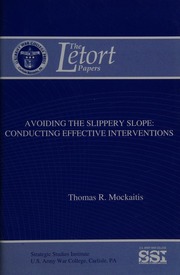
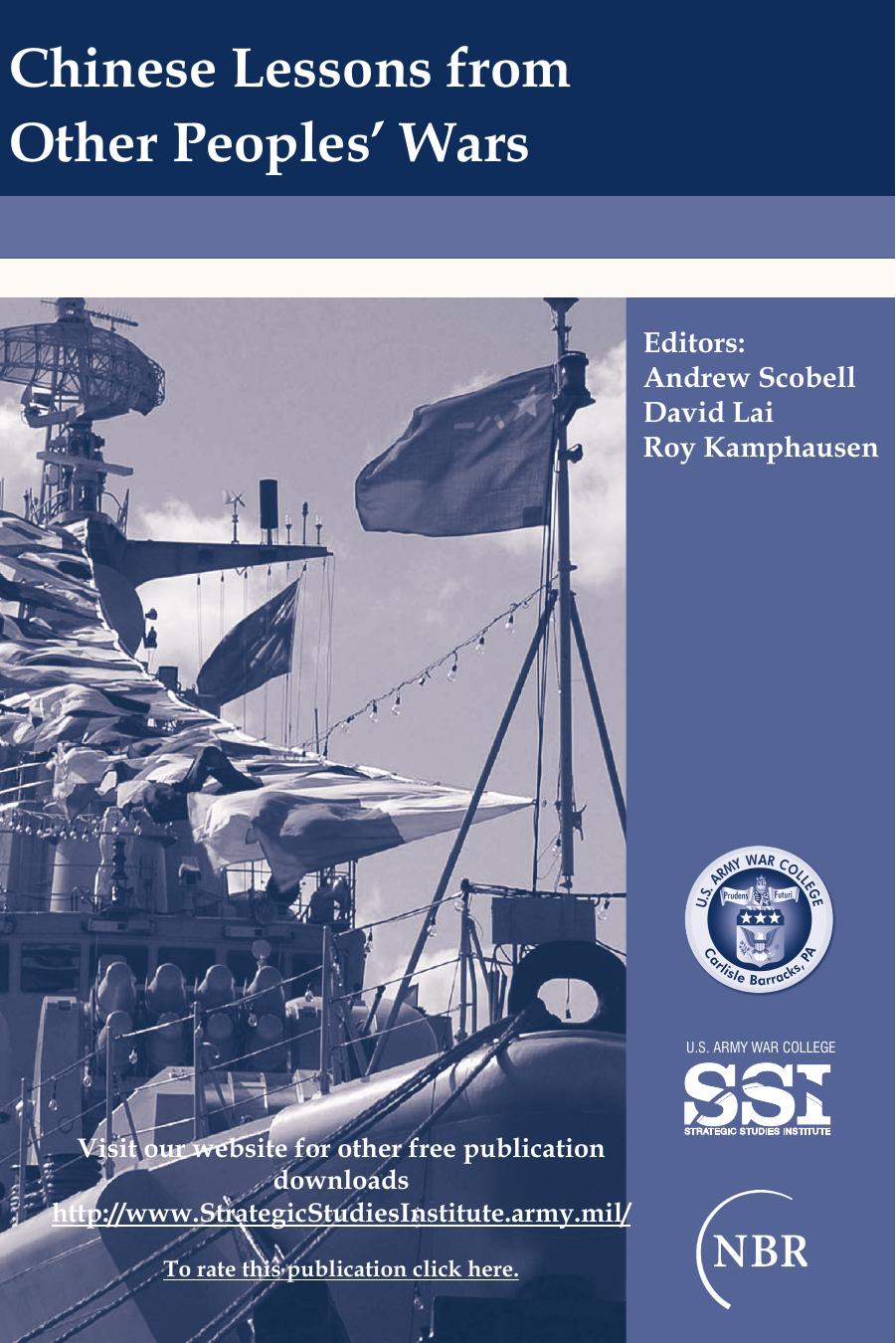
Avoiding the slippery slope : conducting effective interventions by Mockaitis, Thomas R., 1955- author, Army War College (U.S.). Strategic Studies Institute, publisher; Army War College (U.S.). Press, publisher instant download

  • SKU: EBN-239702594
Zoomable Image
$ 32 $ 40 (-20%)

Status:

Available

4.3

31 reviews
Instant download (eBook) Avoiding the slippery slope : conducting effective interventions after payment.
Authors:Mockaitis, Thomas R., 1955- author, Army War College (U.S.). Strategic Studies Institute, publisher; Army War College (U.S.). Press, publisher
Pages:updating ...
Year:2013
Publisher:Carlisle, PA : Strategic Studies Institute and U.S. Army War College Press
Language:english
File Size:5.22 MB
Format:pdf
Categories: Ebooks

Product desciption

Avoiding the slippery slope : conducting effective interventions by Mockaitis, Thomas R., 1955- author, Army War College (U.S.). Strategic Studies Institute, publisher; Army War College (U.S.). Press, publisher instant download

viii, 86 pages ; 23 cm, This Letort Paper covers U.S. military interventions in civil conflicts since the end of the Cold War. It defines intervention as the use of military force to achieve a specific objective (i.e., deliver humanitarian aid, support revolutionaries or insurgents, protect a threatened population, etc.) and focuses on the phase of the intervention in which kinetic operations occurred. The analysis considers five conflicts in which the United States intervened: Somalia (1992-93), Haiti (1994), Bosnia (1995), Kosovo (1999), and Libya (2011). It also reviews two crises in which Washington might have intervened but chose not to: Rwanda (1994) and Syria (2011-12). The author examines each case using five broad analytical questions: 1. Could the intervention have achieved its objective at an acceptable cost in blood and treasure? 2. What policy considerations prompted the intervention? 3. How did the United States intervene? 4. Was the intervention followed by a Phase 4 stability operation? and, 5. Did Washington have a viable exit strategy? From analysis of these cases, the author derives lessons that may guide policy makers in deciding when, where, and how to intervene in the future, \"June 2013.\", Includes bibliographical references (pages 76-86), Introduction -- Military intervention in U.S. history. Era of gunboat diplomacy -- The Cold War -- The post-Cold War era -- Analytical framework. Somalia -- Haiti -- Bosnia -- Kosovo -- Libya -- Noninterventions. Rwanda -- Syria -- Patterns and possibilities. Where to intervene -- When to intervene -- How to intervene -- Follow-on missions -- Exit strategy -- Balancing considerations -- Implications for U.S. land power -- Conclusion
*Free conversion of into popular formats such as PDF, DOCX, DOC, AZW, EPUB, and MOBI after payment.

Related Products

-20%

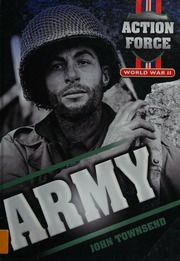
Army by Townsend, John, 1955- author instant download

4.7

28 reviews
$40 $32