logo
Product categories

EbookNice.com

Most ebook files are in PDF format, so you can easily read them using various software such as Foxit Reader or directly on the Google Chrome browser.
Some ebook files are released by publishers in other formats such as .awz, .mobi, .epub, .fb2, etc. You may need to install specific software to read these formats on mobile/PC, such as Calibre.

Please read the tutorial at this link.  https://ebooknice.com/page/post?id=faq


We offer FREE conversion to the popular formats you request; however, this may take some time. Therefore, right after payment, please email us, and we will try to provide the service as quickly as possible.


For some exceptional file formats or broken links (if any), please refrain from opening any disputes. Instead, email us first, and we will try to assist within a maximum of 6 hours.

EbookNice Team
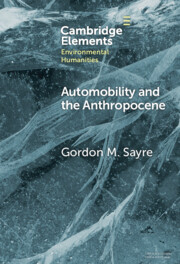
Automobility and the Anthropocene: The Car as Post-Human by Gordon M. Sayre ISBN 9781009526746, 100952674X instant download

  • SKU: EBN-236858454
Zoomable Image
$ 32 $ 40 (-20%)

Status:

Available

4.6

21 reviews
Instant download (eBook) Automobility and the Anthropocene: The Car as Post-Human after payment.
Authors:Gordon M. Sayre
Pages:80 pages
Year:2025
Publisher:Cambridge University Press
Language:english
File Size:1.56 MB
Format:pdf
ISBNS:9781009526746, 100952674X
Categories: Ebooks

Product desciption

Automobility and the Anthropocene: The Car as Post-Human by Gordon M. Sayre ISBN 9781009526746, 100952674X instant download

The automobile has transformed Earth's habitats and humans' habits since the 1890s, when it, this Element argues, began the Anthropocene. Climate change now motivates efforts to reduce greenhouse gas emissions, of which cars and trucks account for at least 10 percent. Shifting to electric vehicles is not enough; one needs to better understand the power cars hold over humans. Environmental humanities scholars examine human/machine hybrids but have ignored the most obvious example. Humans driving cars are social agents constituting a civil society of automobility in roadscape environments. This Element traces the evolution of cars from horsecars, carriages, and bicycles, and the influence of Henry Ford and Alfred P. Sloan on labor standards and consumer behaviors. As the car industry pushes high-tech autonomous or self-driving vehicles, it relies on futuristic fantasies and false promises. The ills of automobility cannot be solved with new products that only intensify human dependence upon cars.
*Free conversion of into popular formats such as PDF, DOCX, DOC, AZW, EPUB, and MOBI after payment.

Related Products