
Most ebook files are in PDF format, so you can easily read them using various software such as Foxit Reader or directly on the Google Chrome browser.
Some ebook files are released by publishers in other formats such as .awz, .mobi, .epub, .fb2, etc. You may need to install specific software to read these formats on mobile/PC, such as Calibre.
Please read the tutorial at this link. https://ebooknice.com/page/post?id=faq
We offer FREE conversion to the popular formats you request; however, this may take some time. Therefore, right after payment, please email us, and we will try to provide the service as quickly as possible.
For some exceptional file formats or broken links (if any), please refrain from opening any disputes. Instead, email us first, and we will try to assist within a maximum of 6 hours.
EbookNice Team
Status:
Available5.0
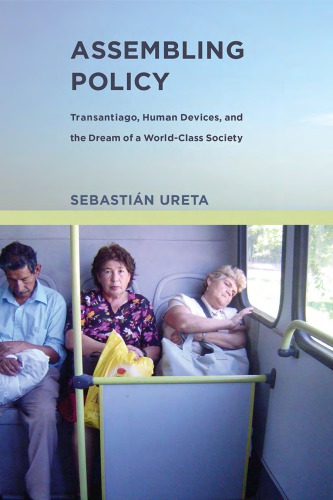
14 reviewsUreta examines Transantiago as a policy assemblage formed by an array of heterogeneous elements — including, crucially, "human devices," or artifacts and practices through which humans were brought into infrastructure planning and implementation. Ureta traces the design and operation of Transantiago through four configurations: crisis, infrastructuration, disruption, and normalization. In the crisis phase, humans were enacted both as consumers and as participants in the transformation of Santiago into a "world-class" city, but during infrastructuration the "active citizen" went missing. The launch of Transantiago caused huge disruptions, in part because users challenged their role as mere consumers and instead enacted unexpected human devices. Resisting calls for radical reform, policymakers insisted on normalizing Transantiago, transforming it into a permanent failing system. Drawing on Chile's experience, Ureta argues that if we understand policy as a series of heterogeneous assemblages, infrastructure policymaking would be more inclusive, reflexive, and responsible.


4.6
12 reviews

4.7
9 reviews

4.4
15 reviews
5.0
10 reviews

4.7
21 reviews