Most ebook files are in PDF format, so you can easily read them using various software such as Foxit Reader or directly on the Google Chrome browser.
Some ebook files are released by publishers in other formats such as .awz, .mobi, .epub, .fb2, etc. You may need to install specific software to read these formats on mobile/PC, such as Calibre.
Please read the tutorial at this link. https://ebooknice.com/page/post?id=faq
We offer FREE conversion to the popular formats you request; however, this may take some time. Therefore, right after payment, please email us, and we will try to provide the service as quickly as possible.
For some exceptional file formats or broken links (if any), please refrain from opening any disputes. Instead, email us first, and we will try to assist within a maximum of 6 hours.
EbookNice Team
Status:
Available4.7
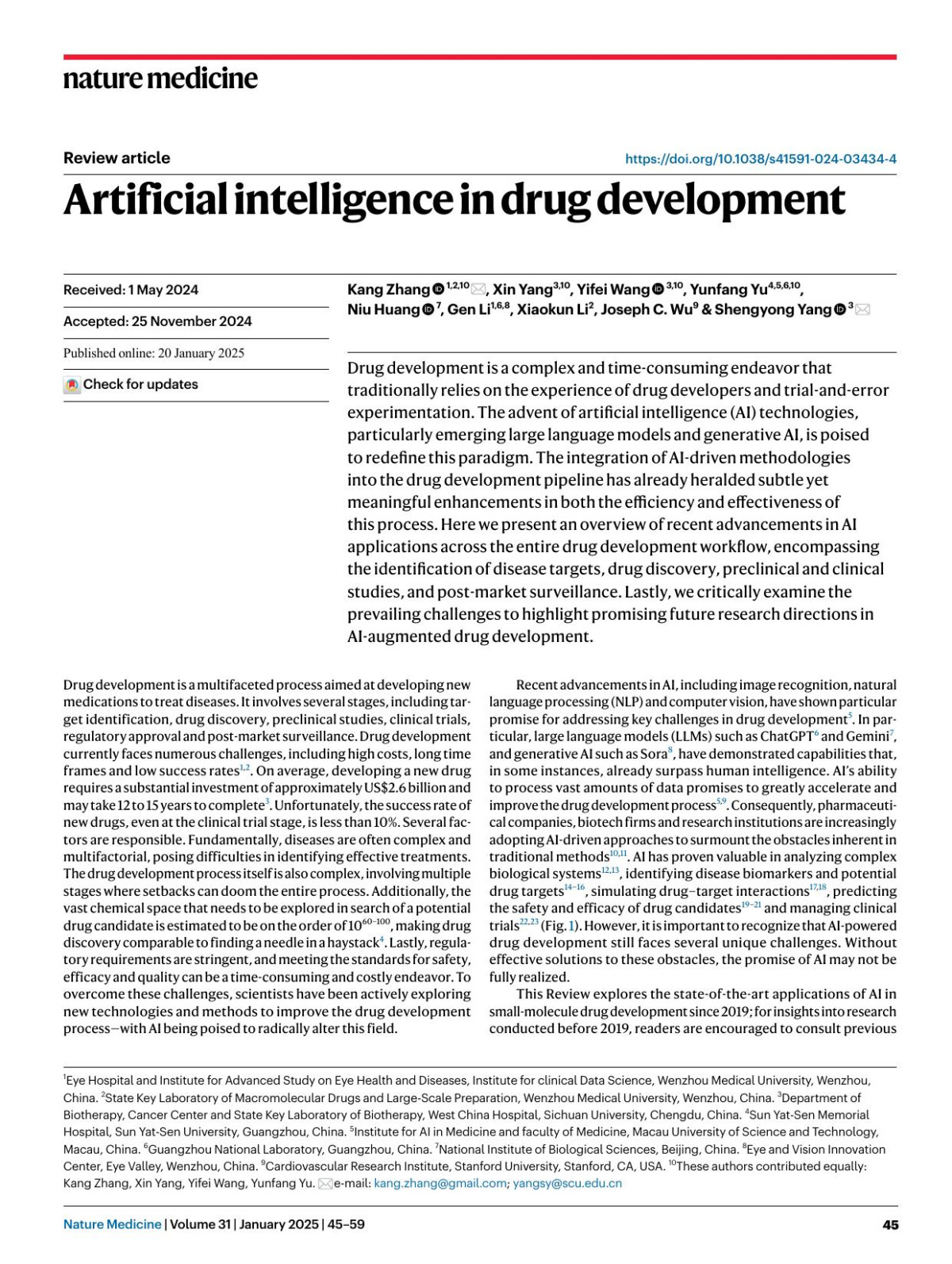
24 reviewsDrug development is a complex and time-consuming endeavor that traditionally relies on the experience of drug developers and trial-and-error experimentation. The advent of artifcial intelligence (AI) technologies, particularly emerging large language models and generative AI, is poised to redefne this paradigm. The integration of AI-driven methodologies into the drug development pipeline has already heralded subtle yet meaningful enhancements in both the efciency and efectiveness of this process. Here we present an overview of recent advancements in AI applications across the entire drug development workfow, encompassing the identifcation of disease targets, drug discovery, preclinical and clinical studies, and post-market surveillance. Lastly, we critically examine the prevailing challenges to highlight promising future research directions in AI-augmented drug development.
4.6
9 reviews
4.5
13 reviews
5.0
11 reviews
4.6
6 reviews

4.5
31 reviews
4.3
6 reviews
4.5
26 reviews
4.4
35 reviews