
Most ebook files are in PDF format, so you can easily read them using various software such as Foxit Reader or directly on the Google Chrome browser.
Some ebook files are released by publishers in other formats such as .awz, .mobi, .epub, .fb2, etc. You may need to install specific software to read these formats on mobile/PC, such as Calibre.
Please read the tutorial at this link. https://ebooknice.com/page/post?id=faq
We offer FREE conversion to the popular formats you request; however, this may take some time. Therefore, right after payment, please email us, and we will try to provide the service as quickly as possible.
For some exceptional file formats or broken links (if any), please refrain from opening any disputes. Instead, email us first, and we will try to assist within a maximum of 6 hours.
EbookNice Team
Status:
Available0.0
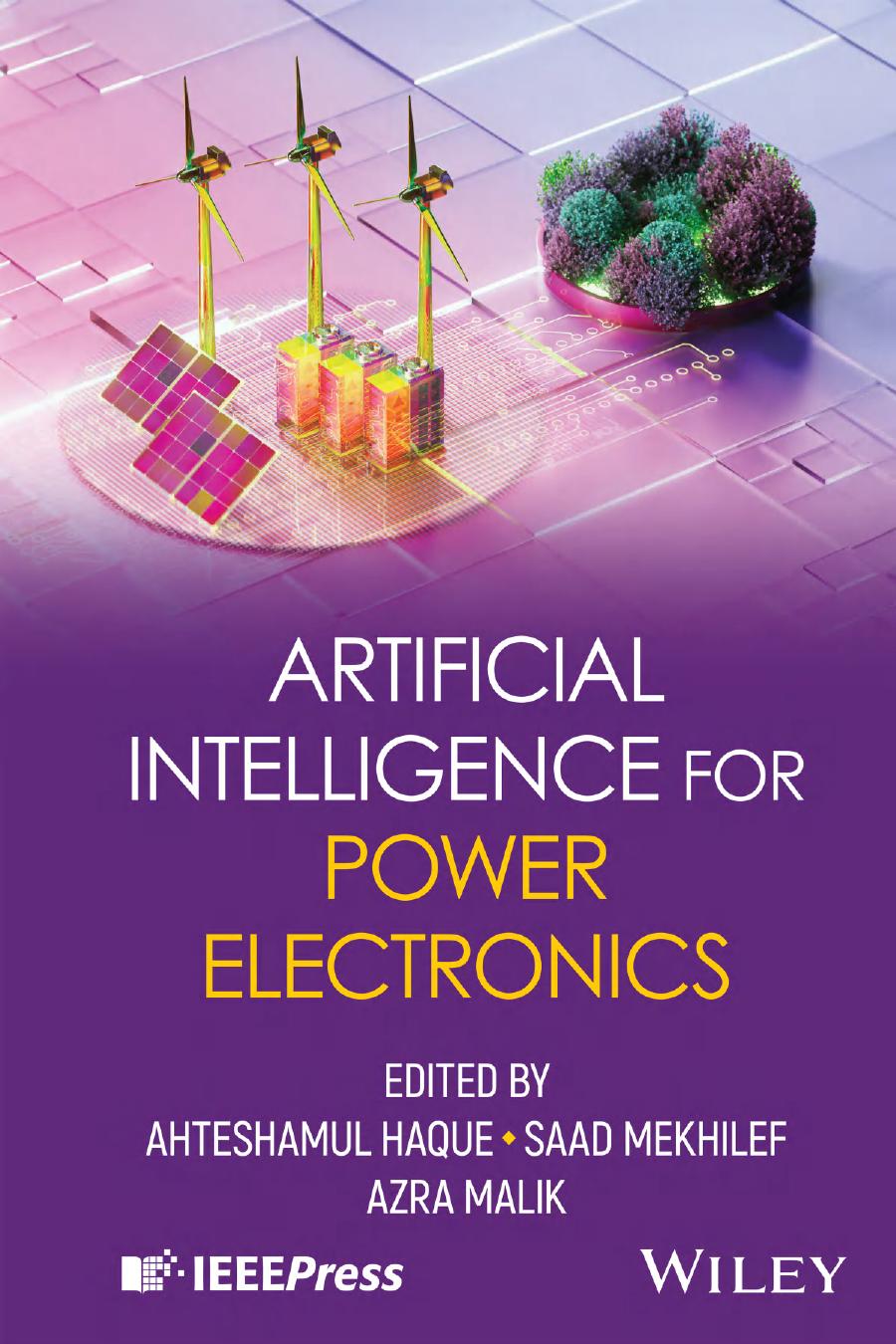
0 reviewsArtificial Intelligence for Power Electronics provides a comprehensive overview of the intersection between artificial intelligence (AI) and the field of power electronics, exploring how AI can revolutionize and enhance the design, control, and optimization of power electronics systems. The book covers the fundamentals of AI and power electronics, and the challenges the field faces in design to production, with the solutions of these challenges through AI methods. Example solutions, along with Q&A review sections, are included throughout the text, with coverage of both Python and MATLAB.
Some of the topics discussed in this book include:
Supervised, unsupervised, and reinforcement machine learning and the role of data in training machine learning models
Techniques for AI data collection in power electronics and how to clean, normalize, and handle missing values of data
Optimization techniques such as Particle Swarm Optimization and Ant Colony Optimization
Detection techniques for identifying faults and anomalies and clustering algorithms to group similar operational behavior
Essential Python libraries for machine learning and how to perform machine learning on a Raspberry Pi
Delivering an industry-specific approach to AI applications, Artificial Intelligence for Power Electronics is a helpful reference for undergraduate, postgraduate, and PhD students in electrical, electronic, and computer engineering. Mechanical engineers and other industry professionals may also find it valuable.
4.6
12 reviews
4.7
28 reviews
4.8
36 reviews
4.3
27 reviews
4.9
21 reviews
4.3
16 reviews