logo
Product categories

EbookNice.com

Most ebook files are in PDF format, so you can easily read them using various software such as Foxit Reader or directly on the Google Chrome browser.
Some ebook files are released by publishers in other formats such as .awz, .mobi, .epub, .fb2, etc. You may need to install specific software to read these formats on mobile/PC, such as Calibre.

Please read the tutorial at this link.  https://ebooknice.com/page/post?id=faq


We offer FREE conversion to the popular formats you request; however, this may take some time. Therefore, right after payment, please email us, and we will try to provide the service as quickly as possible.


For some exceptional file formats or broken links (if any), please refrain from opening any disputes. Instead, email us first, and we will try to assist within a maximum of 6 hours.

EbookNice Team
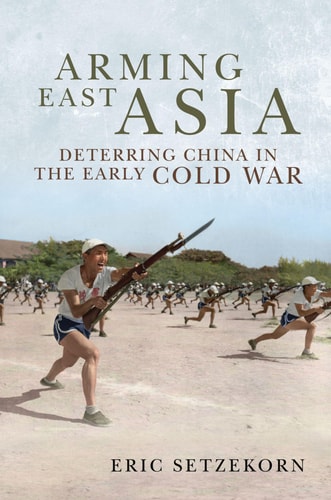
Arming East Asia: Deterring China in the Early Cold War by Eric Setzekorn ISBN 9781682478516, 1682478513 instant download

  • SKU: EBN-236666512
Zoomable Image
$ 32 $ 40 (-20%)

Status:

Available

4.5

18 reviews
Instant download (eBook) Arming East Asia: Deterring China in the Early Cold War after payment.
Authors:Eric Setzekorn
Pages:348 pages
Year:2022
Edition:1st
Publisher:Naval Institute Press
Language:english
File Size:10.41 MB
Format:pdf
ISBNS:9781682478516, 1682478513
Categories: Ebooks

Product desciption

Arming East Asia: Deterring China in the Early Cold War by Eric Setzekorn ISBN 9781682478516, 1682478513 instant download

Arming East Asia: Deterring China in the Early Cold War examines President Eisenhower’s mutual security program in East Asia and explains how that administration worked to contain China. This historical chronicle offers insights and perspectives regarding how to address Sino-American tensions and maintain a free and open Asia-Pacific. Eric Setzekorn argues that President Eisenhower expanded and solidified the U.S. presence in East Asia through use of military aid and military advisory efforts in sharp contrast to the use of U.S. military forces by Presidents Truman, Kennedy and Johnson. In South Korea, Taiwan, Japan, and Southeast Asia (particularly in Thailand and South Vietnam), the United States spent billions of dollars and significant time developing local military forces. By the end of Eisenhower’s two terms, a force of over 1.4 million Allied soldiers in East Asia had been trained, equipped, and often paid through American military assistance.  
 
Eisenhower’s mutual security policies were vital in building local allies, and by the end of the 1950s, East Asia was beginning a long period of growth that would make it the economic heart of the world within fifty years. American policies that created close ties and involvement in the affairs of allied nations also constrained allies, such as Chiang Kai-shek in Taiwan, and Syngman Rhee in South Korea, who often sought to take direct action against the PRC. The heavy role of American military advisors and experts “on the ground” in East Asia also profoundly shaped the character of these nations, all of which were emerging from war, by putting massive resources into the government administration and military forces of newly formed states. With an assertive China using its growing political and military power throughout East Asia, contemporary U.S. security challenges are similar to the situation faced in that earlier contentious era. Eisenhower’s policies from 1953 to 1961 clearly demonstrate an awaren
*Free conversion of into popular formats such as PDF, DOCX, DOC, AZW, EPUB, and MOBI after payment.

Related Products