logo
Product categories

EbookNice.com

Most ebook files are in PDF format, so you can easily read them using various software such as Foxit Reader or directly on the Google Chrome browser.
Some ebook files are released by publishers in other formats such as .awz, .mobi, .epub, .fb2, etc. You may need to install specific software to read these formats on mobile/PC, such as Calibre.

Please read the tutorial at this link.  https://ebooknice.com/page/post?id=faq


We offer FREE conversion to the popular formats you request; however, this may take some time. Therefore, right after payment, please email us, and we will try to provide the service as quickly as possible.


For some exceptional file formats or broken links (if any), please refrain from opening any disputes. Instead, email us first, and we will try to assist within a maximum of 6 hours.

EbookNice Team
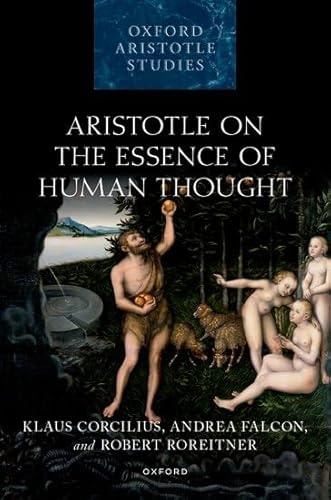
Aristotle on the Essence of Human Thought by Klaus Corcilius, Andrea Falcon, Robert Roreitner ISBN 9780198921790, 0198921799 instant download

  • SKU: EBN-239939314
Zoomable Image
$ 32 $ 40 (-20%)

Status:

Available

4.9

37 reviews
Instant download (eBook) Aristotle on the Essence of Human Thought after payment.
Authors:Klaus Corcilius, Andrea Falcon, Robert Roreitner
Pages:329 pages
Year:2025
Publisher:Oxford University Press
Language:english
File Size:33.42 MB
Format:pdf
ISBNS:9780198921790, 0198921799
Categories: Ebooks

Product desciption

Aristotle on the Essence of Human Thought by Klaus Corcilius, Andrea Falcon, Robert Roreitner ISBN 9780198921790, 0198921799 instant download

This book is concerned with Aristotle’s definition of the human capacity for rational thinking (nous) offered in De anima. For Aristotle, nous is the principle, and ultimate explanans, of all the phenomena of human thinking. The book presents an in-depth interpretation of De anima III 4–8 as a single and coherent philosophical argument. More specifically, the book argues for the following views: (i) Rationalism. Humans come to know the world via two fundamentally different cognitive powers: nous and perception. They are fundamentally different cognitive powers because the nature of their corresponding object is fundamentally different; (ii) Essentialism. The human power for thinking is defined as a capacity for directly grasping the essences of everything there is, including itself. It is this very capacity that Aristotle shows to be the principle of all other kinds of human thinking; (iii) Separatism. Human nous is unmixed with the body, has no dedicated bodily organ, and is separable from the body. As a result, it cannot be assimilated to any of the other parts of the soul. While nous belongs to our essence as human beings, it is not part of the natural world; (iv) Embeddedness in the cognitive soul. Human nous is embedded in a cognitive soul. Among other things, this means that the distinctive activity of human nous—thinking—can only take place in the context of a larger set of activities which are common to the body and the soul.
*Free conversion of into popular formats such as PDF, DOCX, DOC, AZW, EPUB, and MOBI after payment.

Related Products