Most ebook files are in PDF format, so you can easily read them using various software such as Foxit Reader or directly on the Google Chrome browser.
Some ebook files are released by publishers in other formats such as .awz, .mobi, .epub, .fb2, etc. You may need to install specific software to read these formats on mobile/PC, such as Calibre.
Please read the tutorial at this link. https://ebooknice.com/page/post?id=faq
We offer FREE conversion to the popular formats you request; however, this may take some time. Therefore, right after payment, please email us, and we will try to provide the service as quickly as possible.
For some exceptional file formats or broken links (if any), please refrain from opening any disputes. Instead, email us first, and we will try to assist within a maximum of 6 hours.
EbookNice Team
Status:
Available4.3
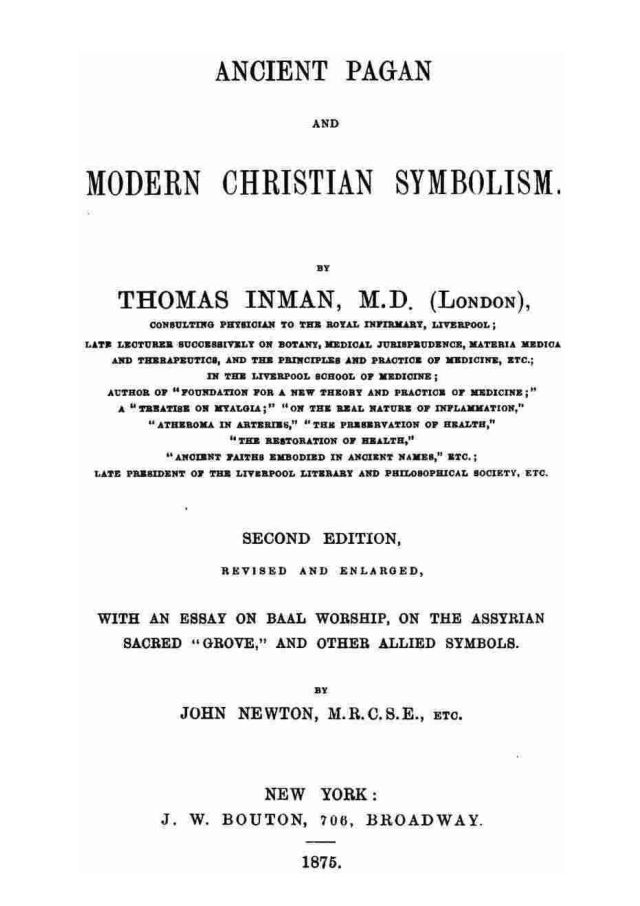
32 reviewsInman argues with relentless erudition that common ecclesiastical symbols—the cross, the triangle, the lamb, even the fish—are not unique to Christianity but are direct descendants of far older, often sexually explicit, pagan emblems representing generative power. The accompanying essay delves deeper, interpreting the Assyrian "sacred grove" and other motifs as further evidence of a universal, primordial religion focused on life, death, and regeneration, which Christianity later absorbed and sanitized.
The book’s strength lies in its staggering compilation of visual evidence. Inman draws from a vast array of sources—Egyptian, Assyrian, Phoenician, Indian, and Classical—presenting engravings of amulets, coins, and sculptures to support his claims. For its time, this comparative approach was groundbreaking, challenging parochial views of religious history.
However, the modern reader must approach Inman with caution. His interpretations are heavily steeped in the 19th-century obsession with "phallic worship," a school of thought now largely viewed as reductive and overly simplistic. His analyses can be speculative, often forcing diverse symbols into a single, rigid interpretive framework. The prose, while passionate, can be dogmatic and lacks the scholarly nuance expected today.
Ultimately, this book is less a definitive scholarly text and more a fascinating historical document. It is essential reading for anyone interested in the history of comparative religion, symbology, and Victorian intellectual daring.
…
4.9
23 reviews
4.8
28 reviews
4.9
15 reviews
4.8
37 reviews
4.9
23 reviews