logo
Product categories

EbookNice.com

Most ebook files are in PDF format, so you can easily read them using various software such as Foxit Reader or directly on the Google Chrome browser.
Some ebook files are released by publishers in other formats such as .awz, .mobi, .epub, .fb2, etc. You may need to install specific software to read these formats on mobile/PC, such as Calibre.

Please read the tutorial at this link.  https://ebooknice.com/page/post?id=faq


We offer FREE conversion to the popular formats you request; however, this may take some time. Therefore, right after payment, please email us, and we will try to provide the service as quickly as possible.


For some exceptional file formats or broken links (if any), please refrain from opening any disputes. Instead, email us first, and we will try to assist within a maximum of 6 hours.

EbookNice Team
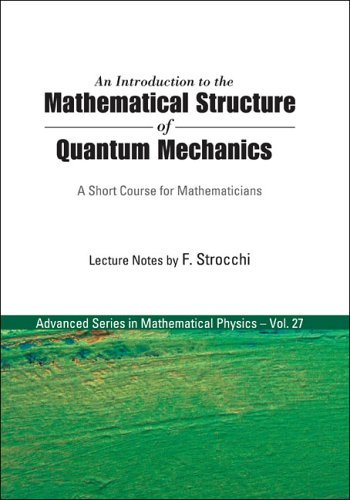
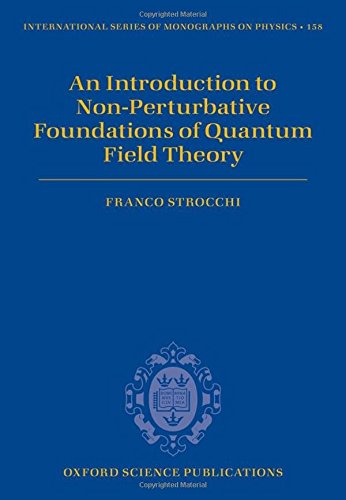
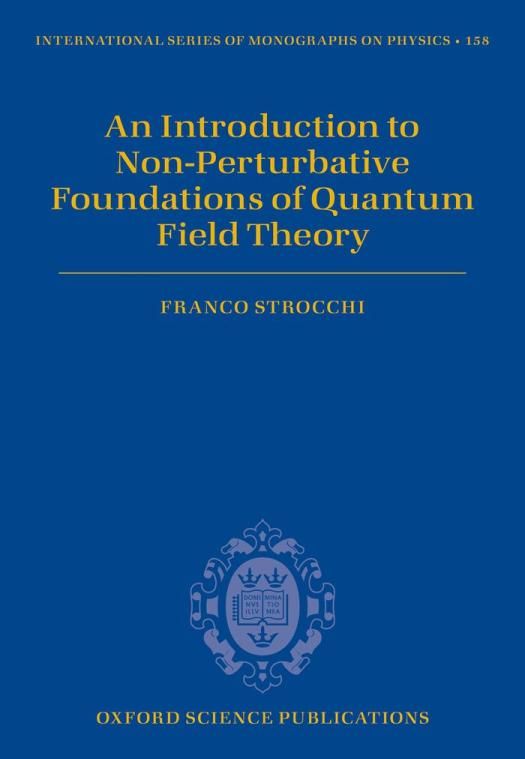
An introduction to the mathematical structure of quantum mechanics: A short course for mathematicians by F. Strocchi ISBN 9789812564313, 9812564314 instant download

  • SKU: EBN-1440142
Zoomable Image
$ 32 $ 40 (-20%)

Status:

Available

4.4

13 reviews
Instant download (eBook) An introduction to the mathematical structure of quantum mechanics: A short course for mathematicians after payment.
Authors:F. Strocchi
Pages:157 pages
Year:2005
Publisher:World Scientific Publishing Company
Language:english
File Size:1.26 MB
Format:djvu
ISBNS:9789812564313, 9812564314
Categories: Ebooks

Product desciption

An introduction to the mathematical structure of quantum mechanics: A short course for mathematicians by F. Strocchi ISBN 9789812564313, 9812564314 instant download

This book arises out of the need for Quantum Mechanics (QM) to be part of the common education of mathematics students. Rather than starting from the Dirac–Von Neumann axioms, the book offers a short presentation of the mathematical structure of QM using the C*-algebraic structure of the observable based on the operational definition of measurements and the duality between states and observables. The description of states and observables as Hilbert space vectors and operators is then derived from the GNS and Gelfand–Naimark Theorems. For finite degrees of freedom, the Weyl algebra codifies the experimental limitations on the measurements of position and momentum (Heisenberg uncertainty relations) and Schroedinger QM follows from the von Neumann uniqueness theorem. The existence problem of the dynamics is related to the self-adjointness of the differential operator describing the Hamiltonian and solved by the Rellich–Kato theorems. Examples are discussed which include the explanation of the discreteness of the atomic spectra. Because of the increasing interest in the relation between QM and stochastic processes, a final chapter is devoted to the functional integral approach (Feynman–Kac formula), the formulation in terms of ground state correlations (Wightman functions) and their analytic continuation to imaginary time (Euclidean QM). The quantum particle on a circle as an example of the interplay between topology and functional integral is also discussed in detail.
*Free conversion of into popular formats such as PDF, DOCX, DOC, AZW, EPUB, and MOBI after payment.

Related Products