logo
Product categories

EbookNice.com

Most ebook files are in PDF format, so you can easily read them using various software such as Foxit Reader or directly on the Google Chrome browser.
Some ebook files are released by publishers in other formats such as .awz, .mobi, .epub, .fb2, etc. You may need to install specific software to read these formats on mobile/PC, such as Calibre.

Please read the tutorial at this link.  https://ebooknice.com/page/post?id=faq


We offer FREE conversion to the popular formats you request; however, this may take some time. Therefore, right after payment, please email us, and we will try to provide the service as quickly as possible.


For some exceptional file formats or broken links (if any), please refrain from opening any disputes. Instead, email us first, and we will try to assist within a maximum of 6 hours.

EbookNice Team
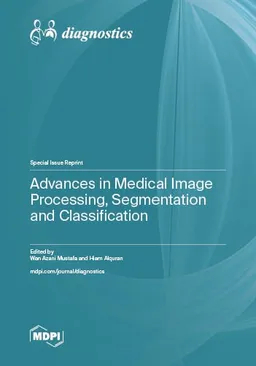
Advances in Medical Image Processing, Segmentation and Classification by Wan Azani Mustafa, Hiam Alquran ISBN 9783725841240, 9783725841233, 3725841241, 3725841233 instant download

  • SKU: EBN-236990454
Zoomable Image
$ 32 $ 40 (-20%)

Status:

Available

0.0

0 reviews
Instant download (eBook) Advances in Medical Image Processing, Segmentation and Classification after payment.
Authors:Wan Azani Mustafa, Hiam Alquran
Pages:280 pages
Year:2025
Publisher:MDPI
Language:english
File Size:37.39 MB
Format:pdf
ISBNS:9783725841240, 9783725841233, 3725841241, 3725841233
Categories: Ebooks

Product desciption

Advances in Medical Image Processing, Segmentation and Classification by Wan Azani Mustafa, Hiam Alquran ISBN 9783725841240, 9783725841233, 3725841241, 3725841233 instant download

Medical data typically include physiological signals, diagnostic images, and treatment histories, offering essential insights into patient conditions and outcomes. Computer-aided diagnosis (CAD) systems—used for detection, segmentation, and classification—are now key components of clinical workflows. 
-
These systems apply image processing techniques to ensure accurate analysis across CT, MRI, X-ray, and ultrasound scans. Artificial intelligence (AI), especially machine learning and deep learning, has further advanced CAD by enabling automated, accurate disease detection. 
-
Yet, the success of such models depends on large, annotated datasets and expertise in preprocessing, modeling, and validation. AI-driven CAD systems have shown strong potential in diverse clinical settings. Future work should prioritize multi-center data sharing, federated learning, few-shot learning, and explainable AI to enhance reliability and adaptability. 
-
Integrating AI with technologies like the Internet of Medical Things (IoMT) opens doors to real-time, scalable diagnostics. With continued innovation and rigorous validation, AI is set to become an essential part of clinical decision-making. This volume presents cutting-edge research and strategies to address current gaps, aiming to improve patient outcomes and advance global healthcare systems.
*Free conversion of into popular formats such as PDF, DOCX, DOC, AZW, EPUB, and MOBI after payment.

Related Products