
Most ebook files are in PDF format, so you can easily read them using various software such as Foxit Reader or directly on the Google Chrome browser.
Some ebook files are released by publishers in other formats such as .awz, .mobi, .epub, .fb2, etc. You may need to install specific software to read these formats on mobile/PC, such as Calibre.
Please read the tutorial at this link. https://ebooknice.com/page/post?id=faq
We offer FREE conversion to the popular formats you request; however, this may take some time. Therefore, right after payment, please email us, and we will try to provide the service as quickly as possible.
For some exceptional file formats or broken links (if any), please refrain from opening any disputes. Instead, email us first, and we will try to assist within a maximum of 6 hours.
EbookNice Team
Status:
Available0.0
0 reviewsISBN 10: 0415814251
ISBN 13: 9780415814256
Author: Thomas E. Brown
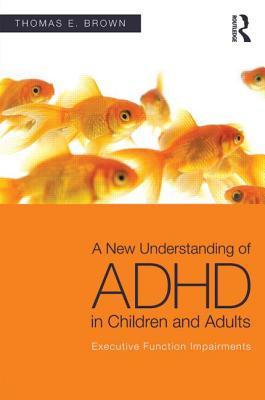
For over 100 years, ADHD has been seen as essentially a behavior disorder. Recent scientific research has developed a new paradigm which recognizes ADHD as a developmental disorder of the cognitive management system of the brain, its executive functions. This cutting-edge book pulls together key ideas of this new understanding of ADHD, explaining them and describing in understandable language scientific research that supports this new model. It addresses questions like: - Why can those with ADHD focus very well on some tasks while having great difficulty in focusing on other tasks they recognize as important? - How does brain development and functioning of persons with ADHD differ from others? - How do impairments of ADHD change from childhood through adolescence and in adulthood? - What treatments help to improve ADHD impairments? How do they work? Are they safe? - Why do those with ADHD have additional emotional, cognitive, and learning disorders more often than most others? - What commonly-held assumptions about ADHD have now been proven wrong by scientific research? Psychiatrists, psychologists, social workers, and other medical and mental health professionals, as well as those affected by ADHD and their families, will find this to be am insightful and invaluable resource.
1 35 Myths about ADHD and why they are Wrong
1 A person who has ADHD always has difficulty with executive functions such as focusing on a task and keeping things in mind, regardless of what they are doing.
2 Everyone has impairments of executive functions; those with ADHD are just like everybody else.
3 If a person with ADHD really wants to focus and work effectively on a task they can make themselves do it. Using executive functions is just a matter of “willpower.”
4 Anyone who has ADHD will show clear signs of it during early childhood and will continue to have difficulties with executive functions for the rest of his/her life.
5 Impairments of executive function are best assessed by neuropsychological “tests of executive function” administered by a neuropsychologist.
6 Persons with high IQ are not likely to have executive function impairments of ADHD because they are smart enough to overcome such difficulties.
7 Modern imaging techniques such as PET and fMRI scans or computerized tests can provide objective evidence to diagnose executive function impairments associated with ADHD.
8 Executive function impairments of ADHD usually are outgrown when the person reaches their late teens or early twenties.
9 Modern research methods have established that executive function impairments are localized mainly in the prefrontal cortex.
10 Emotions and motivation are not involved in executive functions associated with ADHD.
11 Impairments of executive function occur only if the person has inherited ADHD.
12 Usually executive functions of ADHD are problematic only while a person is in school. Once they get out of school, executive function impairments are not much of a problem.
13 The new model of ADHD as developmentally impaired executive function is completely different from the older model of ADHD.
14 ADHD is a problem that occurs mainly in males and rarely in females.
15 If a person with ADHD is hyperactive and impulsive during childhood, they are likely to continue that way into adulthood.
16 ADHD-related executive function impairments are due primarily to a “chemical imbalance” in the brain.
17 There is no real evidence of significant differences in brain development and functioning in those with executive function impairments of ADHD compared to those without ADHD.
18 For some individuals with ADHD, prescribed medications can cure their ADHD impairments so they do not need to keep taking the medication.
19 Most countries outside the U.S. do not have many persons with ADHD; this is primarily a problem in the U.S.
20 Stimulant medications used to treat ADHD-related executive functions are highly addictive and carry considerable risk of dangerous cardiovascular problems.
21 The dose and timing of medications used to treat executive function impairment are quite similar for persons of similar age and body mass.
22 There is no evidence that medications for ADHD actually improve executive function impairments or that any improvements last.
23 It is quite risky to administer medications for ADHD problems to preschool-aged children.
24 There is no evidence that medication treatment for ADHD executive function impairments improves learning or academic achievement.
25 Behavior modification and other psychosocial methods are just as effective for treating executive function impairments of ADHD as are medications.
26 Individuals with ADHD have no more likelihood of having depression, anxiety problems, Obsessive-Compulsive Disorder or other psychiatric problems than anyone else of the same age.
27 Learning disorders like dyslexia, math disorder and disorder of written expression are quite separate from the executive function impairments of ADHD. They require special education, not medication treatments.
28 Most children with ADHD also have behavior problems of Oppositional Defiant Disorder which usually leads to the more severe delinquent behaviors of Conduct Disorder.
29 Obsessive-Compulsive Disorder is rarely associated with ADHD.
30 Recent research has identified a gene that causes executive function problems in persons with ADHD.
31 If a child or adolescent with ADHD is treated with stimulant medications, they are being put at increased risk of developing a substance use disorder.
32 An individual with an Autistic Spectrum Disorder should not be diagnosed with ADHD and vice versa. These are completely separate disorders which require totally different treatments.
33 Problems with lack of adequate sleep often cause impairments of ADHD-related executive functions.
34 ADHD impairments sometimes last into early adulthood, but then they usually diminish before middle age.
35 ADHD is just one of many psychiatric disorders.
2 A New Paradigm for an Old Disorder ADHD as Impaired Executive Functions
Old and New Definitions of ADHD
• ADHD is a Complex Syndrome
• Executive Functions are the Self-management System of the Brain
• ADHD is a Developmental Impairment of these Executive Functions
• ADHD Impairments of Executive Functions are Situationally Variable
• Self-management Functions Impaired in ADHD Mostly Operate Unconsciously
• ADHD Symptoms are Chronic and Significantly Interfere with Functioning in Many Aspects of the Person's Daily Life
Similarities and Differences between the Old and New Models of ADHD
Prevalence of ADHD According to Old and New Models
Executive Function Impairments Arising in Later Adult Years
3 What Research Reveals About the Causes and Unfolding Nature of ADHD
Varieties of Impairment in ADHD
Duration of Impairment in ADHD
Emotional and Motivational Aspects of ADHD
Intra-Individual Variability of ADHD Impairments
Brain Development, Structure and Functioning in ADHD
Intelligence and ADHD
Heritability and Genetics of ADHD
Expanding Directions of Neuroscience Research in ADHD
4 How the New Model Changes Assessment of ADHD in Children and Adults
Age of Onset
Specific Symptoms and Cutoffs for Diagnosis
Alternative Ratings of ADHD Symptoms
Normed Symptom Rating Scales for ADHD-Related Impairments of Executive Functions
Rating Scales versus Neuropsychological Tests
The Clinical Interview
Screening for Possible Comorbid Disorders
Additional Measures for the Clinical Interview
Limitations of “Objective” Measures
Education about ADHD as an Aspect of Assessment
5 How Treatments for ADHD Affect the Brain and Improve Executive Functions
Education about ADHD: A Critical Component of Treatment
Mechanism of Action in Medication Treatment for ADHD
Individual Variability in Response to Medication Treatment for ADHD
Evidence of Effectiveness of Medication Treatment for ADHD
Imaging Studies
Experimental Studies
Clinical Trials of Medication Treatment for ADHD
Age Considerations in Use of Stimulant Medications for ADHD
Longer Term Effects of Medication Treatment on Academic Functioning
Persistence in Use of Medication Treatments for ADHD
Risks and Safety of Medications Used to Treat ADHD
Psychosocial Interventions for ADHD
Comparisons of Effectiveness of Medication and/or Psychosocial Treatments for ADHD
Accommodations for Individuals with ADHD
6 Why Many Learning and Psychiatric Disorders so often Co-occur with ADHD
ADHD with Learning Disorders
How ADHD is Related to Learning Disorders
ADHD with Anxiety and Depressive Disorders
How ADHD is Related to Anxiety and Depressive Disorders
ADHD with Bipolar Disorders
How ADHD is Related to Bipolar Disorders
ADHD with Oppositional Defiant Disorder and/or Conduct Disorder
How ADHD is Related to Oppositional Defiant Disorder and Conduct Disorder
ADHD with Obsessive-Compulsive Disorders and Hoarding Disorders
How is ADHD Related to OCD and Hoarding Disorder?
ADHD with Substance Use Disorders
How are ADHD and Substance Use Disorders Related?
ADHD with Autistic Spectrum Disorders
How are ADHD and Autistic Spectrum Disorders Related?
Overview of Comorbidity between ADHD and Other Disorders
adhd executive function impairments pdf
thomas e brown adhd book
adult adhd executive functioning
adhd neuroscience explanation
adhd assessment and treatment guide
Tags: New Understanding, Children, Adults, Executive Function, Impairments, Thomas Brown
4.5
27 reviews
4.3
33 reviews
5.0
13 reviews
4.4
36 reviews
4.5
39 reviews
4.7
10 reviews
5.0
38 reviews
5.0
39 reviews