logo
Product categories

EbookNice.com

Most ebook files are in PDF format, so you can easily read them using various software such as Foxit Reader or directly on the Google Chrome browser.
Some ebook files are released by publishers in other formats such as .awz, .mobi, .epub, .fb2, etc. You may need to install specific software to read these formats on mobile/PC, such as Calibre.

Please read the tutorial at this link.  https://ebooknice.com/page/post?id=faq


We offer FREE conversion to the popular formats you request; however, this may take some time. Therefore, right after payment, please email us, and we will try to provide the service as quickly as possible.


For some exceptional file formats or broken links (if any), please refrain from opening any disputes. Instead, email us first, and we will try to assist within a maximum of 6 hours.

EbookNice Team
A Landscape of Plenty: Excavations on a Roman Estate, Cambridgeshire by Francis M. Morris & James E. R. Davey ISBN 9781805831044, 9781805831037, 1805831046, 1805831038 instant download

  • SKU: EBN-239837352
Zoomable Image
$ 32 $ 40 (-20%)

Status:

Available

4.6

15 reviews
Instant download (eBook) A Landscape of Plenty: Excavations on a Roman Estate, Cambridgeshire after payment.
Authors:Francis M. Morris & James E. R. Davey
Pages:228 pages
Year:2025
Publisher:Archaeopress Publishing Ltd
Language:english
File Size:20.3 MB
Format:pdf
ISBNS:9781805831044, 9781805831037, 1805831046, 1805831038
Categories: Ebooks

Product desciption

A Landscape of Plenty: Excavations on a Roman Estate, Cambridgeshire by Francis M. Morris & James E. R. Davey ISBN 9781805831044, 9781805831037, 1805831046, 1805831038 instant download

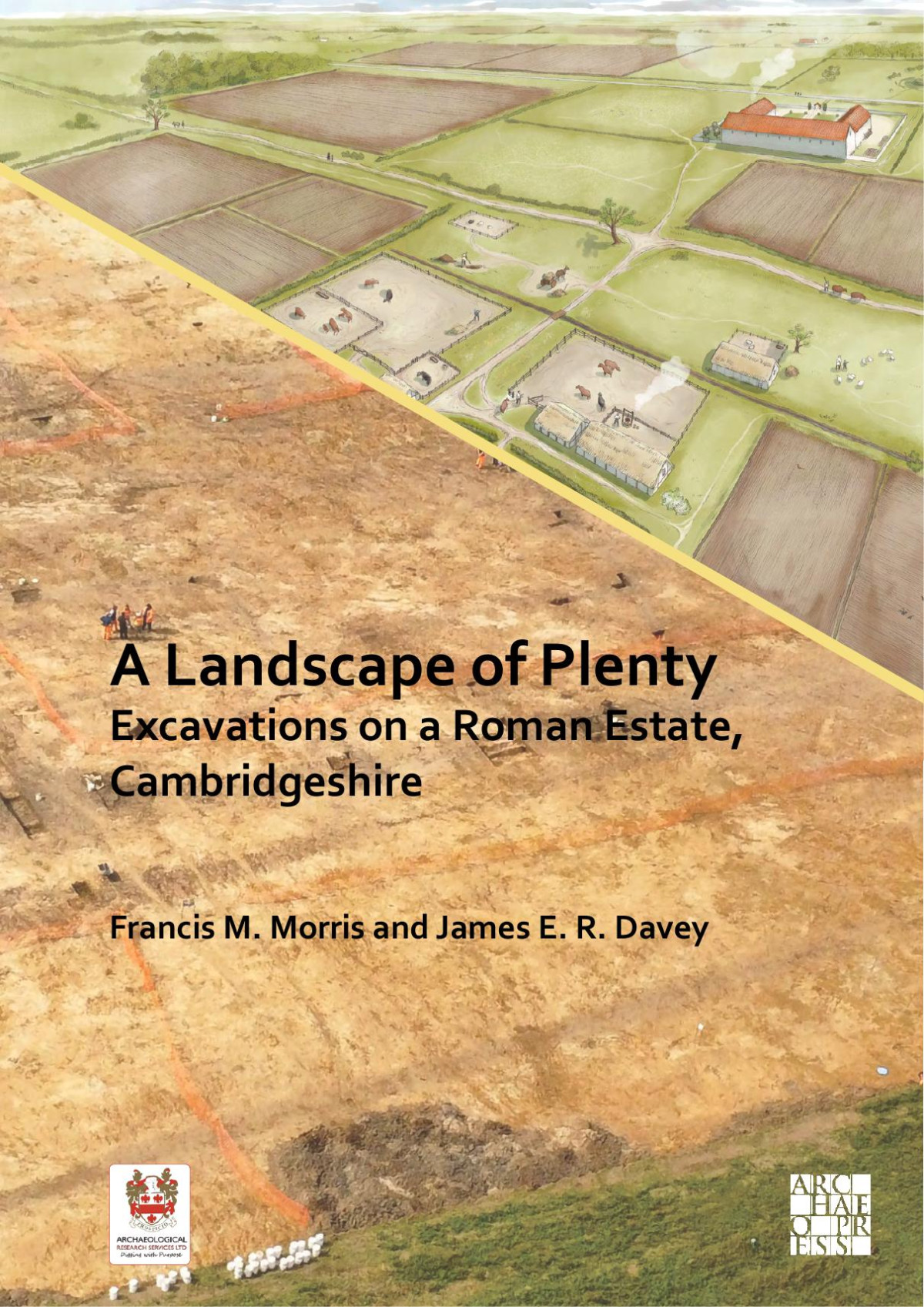
A large archaeological excavation was undertaken in 2023 prior to the construction of the new Cambridgeshire Southern Police Station directly west of the village of Milton, 4km north-east of the historic core of Cambridge.-The main features revealed were ditches that formed part of an extensive and complex series of intercutting late Roman period enclosures with associated boundary ditches, trackways, small timber structures, pits , waterholes or wells, a pond and an oven. Activity on the site probably began in the mid-3rd century AD, apparently peaked in the mid- to late 4th century AD and possibly extended into the 5th century AD.
-
The remains indicate an intensive agricultural working area where activities related to the surplus production of grain and the penning/keeping and breeding of considerable numbers of domestic animals, principally cattle for traction activities such as ploughing and transport. This working area may well have formed part of a villa estate and evidence from the site and its vicinity indicates that a villa probably lay nearby—most likely in the unexcavated area immediately to the south.
-
A wide array of Roman finds was recovered, including a large pottery assemblage, 68 coins, ironwork, copper-alloy objects, glass vessels. These suggested basic, utilitarian occupation and activity, although some objects suggest ‘higher-status’ occupation in the vicinity. Evidence for small-scale bone and antler working appeared to reflect the manufacture of pins and handles respectively. A poignant discovery was a burial of three infants of the same age, very likely triplets, in a pit cut into the inner side of an enclosure ditch, probably in the late 4th century AD.
-
This agricultural working area/probable villa estate appears to have gone out of use around the end of the Roman period, c.AD 400 or shortly after, with enclosure and boundary ditches filled up at about this date. No features or finds of Anglo-Saxon date were recorded.
*Free conversion of into popular formats such as PDF, DOCX, DOC, AZW, EPUB, and MOBI after payment.

Related Products