Most ebook files are in PDF format, so you can easily read them using various software such as Foxit Reader or directly on the Google Chrome browser.
Some ebook files are released by publishers in other formats such as .awz, .mobi, .epub, .fb2, etc. You may need to install specific software to read these formats on mobile/PC, such as Calibre.
Please read the tutorial at this link. https://ebooknice.com/page/post?id=faq
We offer FREE conversion to the popular formats you request; however, this may take some time. Therefore, right after payment, please email us, and we will try to provide the service as quickly as possible.
For some exceptional file formats or broken links (if any), please refrain from opening any disputes. Instead, email us first, and we will try to assist within a maximum of 6 hours.
EbookNice Team
Status:
Available5.0
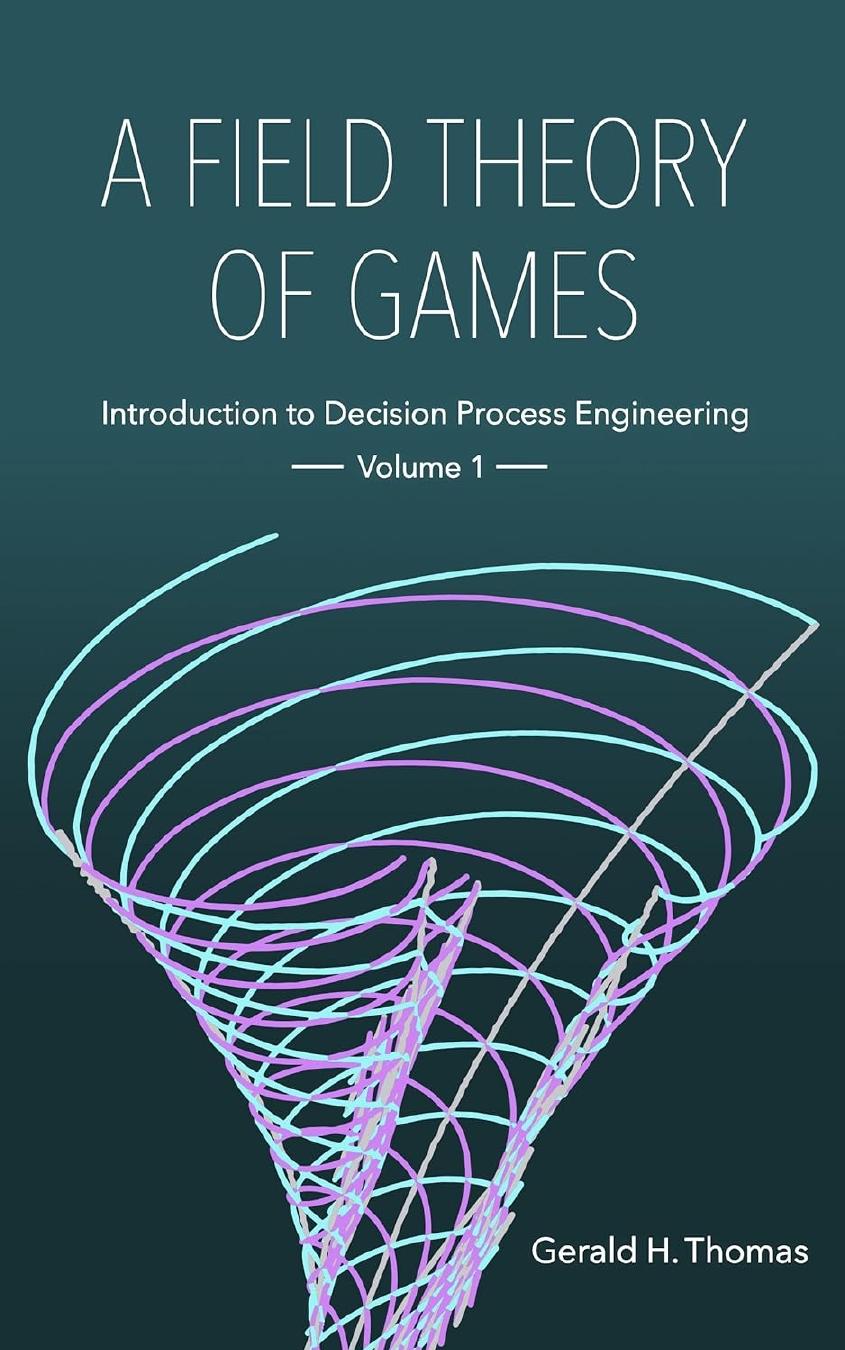
40 reviewsFor decades, the study of strategic interactions between rational decision makers has formed the basis of game theory. In this two-volume series, Professor Gerald H. Thomas, instructor of a successful engineering course, extends game theory concepts to focus on dynamic games, introducing students to a new take on game theory referred to as the field theory of games. Thomas prioritizes conceptual understanding over mathematical equation solving, making the text accessible to not only engineering students but also to a more general audience, including business students.
By using a toolkit based on the Wolfram Language, readers can bypass the need to solve linear programming problems and partial differential equations by hand, allowing them to arrive at solutions with practical applications more efficiently. Though this book begins with classical game theory, it differs from the usual approaches to dynamic games and deals with incomplete information by using constraints in a geometric theory, where the shortest path provides a deterministic prediction of future behaviors. In Volume 1, students will learn to apply introductory ideas to a system without constraints. The next installment of the series, Volume 2, will explore the consequences of adding constraints and provide an application guide.
Contents:
• Preface
• Game Theory
• Cultural Decision Models
• Non-Zero-Sum Games, Flows, and Sources
• Ownership Constraints
• Ownership Flows
• Conserved Owner Streams
• Networks
• Utility Metric Gradients
• Inertial Flows
• Appendix A
• References
About the Author
Gerald H. Thomas has 10 years of experience in high-energy particle physics at CERN in Switzerland and Finland, as well as at Argonne National Laboratory, USA, followed by 25 years in the corporate world at both AT&T Bell Labs and Motorola (cellular division), and at a successful start-up company in Florida, USA. The corporate experiences included project management, software engineering, and senior and executive management.
More

5.0
13 reviews
4.4
25 reviews

5.0
23 reviews
5.0
34 reviews
4.6
41 reviews