
Most ebook files are in PDF format, so you can easily read them using various software such as Foxit Reader or directly on the Google Chrome browser.
Some ebook files are released by publishers in other formats such as .awz, .mobi, .epub, .fb2, etc. You may need to install specific software to read these formats on mobile/PC, such as Calibre.
Please read the tutorial at this link. https://ebooknice.com/page/post?id=faq
We offer FREE conversion to the popular formats you request; however, this may take some time. Therefore, right after payment, please email us, and we will try to provide the service as quickly as possible.
For some exceptional file formats or broken links (if any), please refrain from opening any disputes. Instead, email us first, and we will try to assist within a maximum of 6 hours.
EbookNice Team
Status:
Available4.4
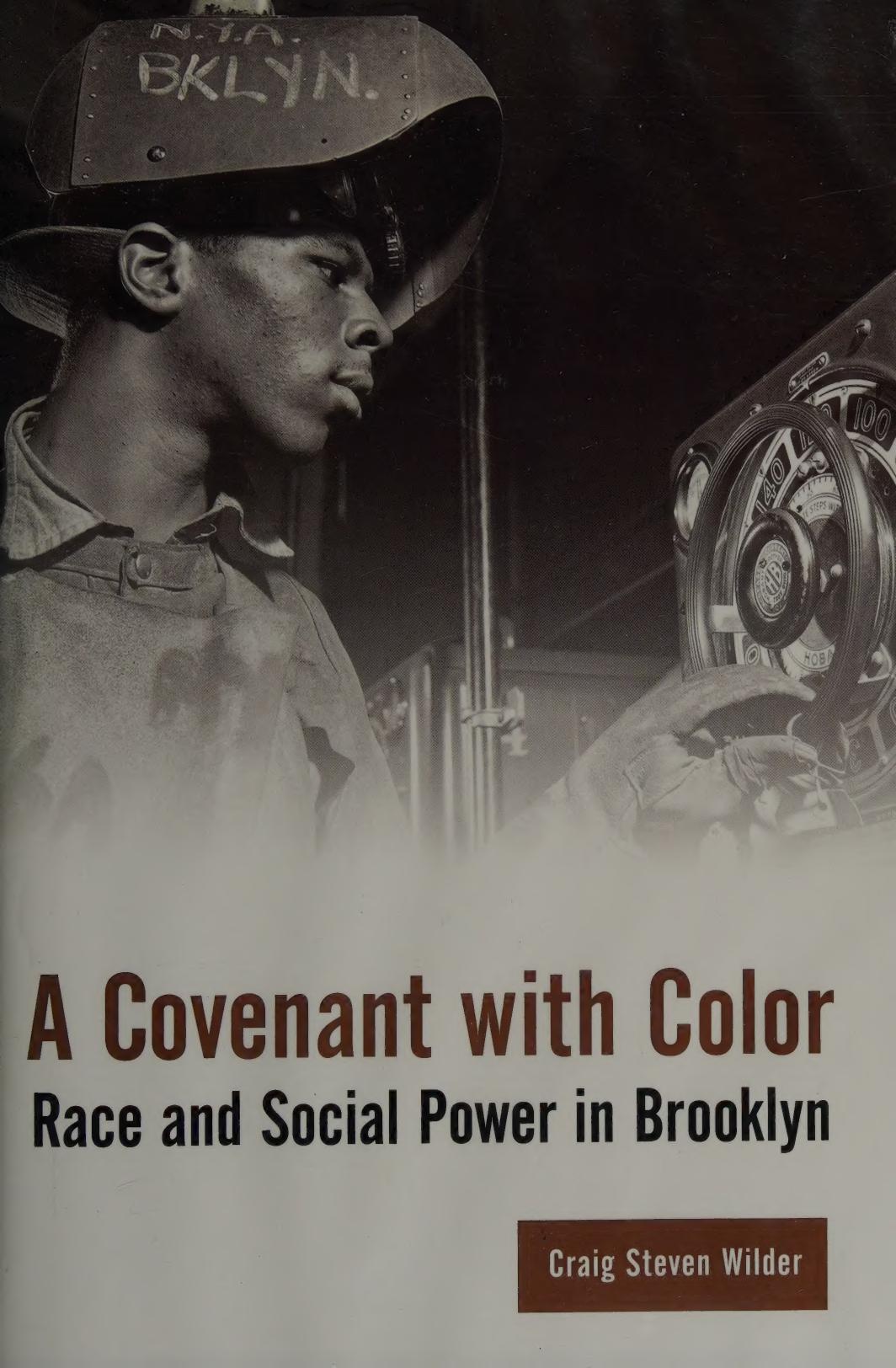
13 reviewsIn charting the social history of one of the nation's oldest urban locales, Wilder contends that power relations―in all their complexity―are the starting point for understanding Brooklyn's turbulent racial dynamics. He spells out the workings of power―its manipulation of resources, whether in the form of unfree labor, privileges of citizenship, better jobs, housing, government aid, or access to skilled trades. Wilder deploys an extraordinary spectrum of evidence to illustrate the mechanics of power that have kept African American Brooklynites in subordinate positions: from letters and diaries to family papers of Kings County's slaveholders, from tax records to the public archives of the Home Owners Loan Corporation.
Wilder illustrates his points through a variety of cases, including banking interests, the rise of Kings County's colonial elite, industrialization and slavery, race-based distribution of federal money in jobs, and mortgage loans during and after the Depression. He delves into the evolution of the Brooklyn ghetto, tracing how housing segregation corralled African Americans in Bedford-Stuyvesant. The book explores colonial enslavement, the rise of Jim Crow, labor discrimination and union exclusion, and educational inequality. Throughout, Wilder uses Brooklyn as a lens through which to view larger issues of race and power on a national level.
One of the few recent attempts to provide a comprehensive history of race relations in an American city, A Covenant
…
5.0
25 reviews
4.7
9 reviews
5.0
7 reviews
5.0
41 reviews
4.4
20 reviews
4.4
14 reviews
4.7
23 reviews
4.7
41 reviews
4.5
24 reviews