
Most ebook files are in PDF format, so you can easily read them using various software such as Foxit Reader or directly on the Google Chrome browser.
Some ebook files are released by publishers in other formats such as .awz, .mobi, .epub, .fb2, etc. You may need to install specific software to read these formats on mobile/PC, such as Calibre.
Please read the tutorial at this link. https://ebooknice.com/page/post?id=faq
We offer FREE conversion to the popular formats you request; however, this may take some time. Therefore, right after payment, please email us, and we will try to provide the service as quickly as possible.
For some exceptional file formats or broken links (if any), please refrain from opening any disputes. Instead, email us first, and we will try to assist within a maximum of 6 hours.
EbookNice Team
Status:
Available5.0
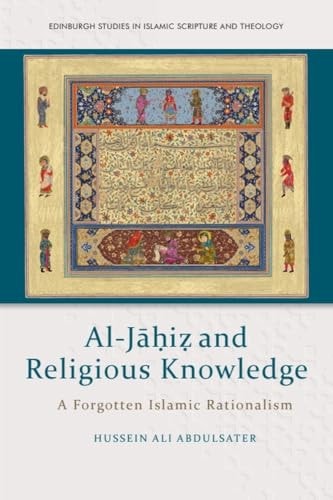
37 reviews• Expands the discussion of Islamic rationalism by engaging with a naturalist, empiricist and humanist outlook instead of the pervasive metaphysical and traditionalist approaches
• Provides an unprecedented meticulous engagement with numerous dense texts (covering several thousand pages)
• Reconstructs Jāḥiẓ’s epistemology through a systematic reading of his oeuvre
• Fills a gap within the humanities by showing the vitality of Islamic intellectual history as a source for comparative study
While it may seem paradoxical to combine trust in rational religion with distrust of human reason, this is exactly what a group of understudied Muslim theologians proposed. Known as the Epistemists, they pushed for an inclusive epistemology that broadened the scope of knowledge. They argued that humans can acquire rational knowledge without discursive arguments, through an unconscious process of social exposure. In this, the Epistemists presented a radical alternative to other Islamic conceptions of rationalism, with immense promise for modern contexts.
This book reconstructs a worldview prominent among the Epistemists, and explores how it correlates with their rise and fall as a theological trend. It examines the intellectual project of their premier advocate, al-Jāḥiẓ (d. 868-9), offering a systematic reading of his oeuvre as an Epistemist, and situates it in the formative ʿAbbasid moment of Islamic history.
"This is a most original and distinctive contribution to the subject. A towering figure in pre-modern Islamic culture, al-Jahiz, receives in this work a completely novel reappraisal."
– Tarif Khalidi, American University of Beirut
4.6
25 reviews
4.3
39 reviews
4.6
18 reviews

4.3
41 reviews